JttE Seoul D3

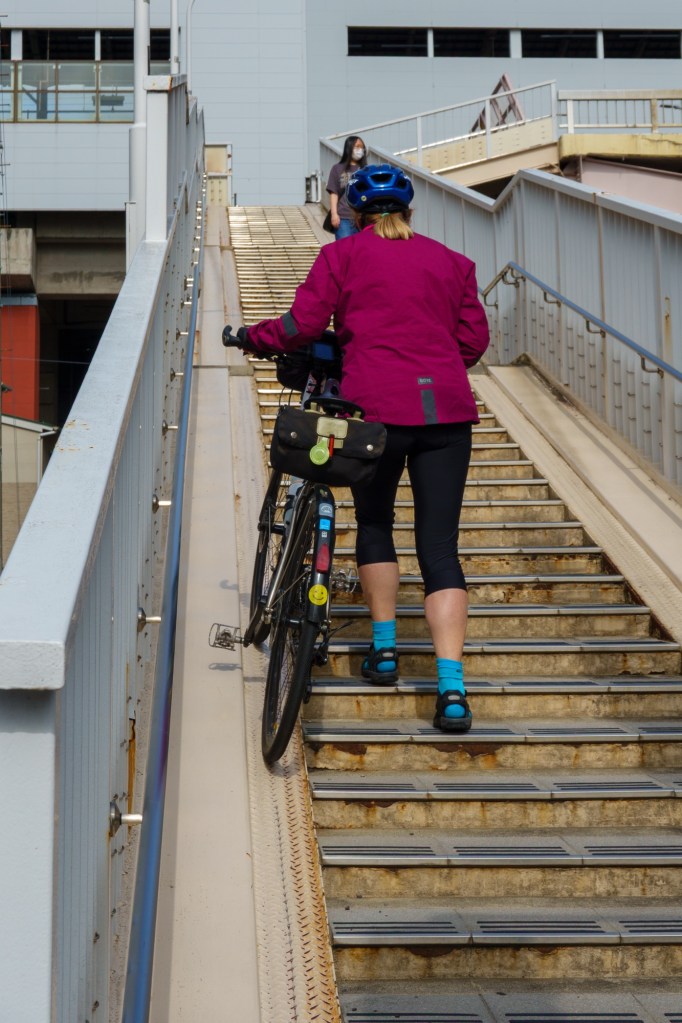
Experts now. Straight onto the bus. Tap n go. For such a dense population, the traffic moves freely. Maybe saving petrol given they are one of the most exposed to Middle East oil supply problems. The American Embassy looked suitable reinforced.

A Gemini search helped explain costs:

South Korea often feels significantly cheaper for UK visitors because of the stronger purchasing power of the British Pound and much lower costs for services like dining and transportation. While Korea has experienced inflation, the UK’s has been more severe recently, keeping your money going further in Seoul than in London.

  1. Stronger Exchange Rate [4]
    The British Pound has gained significant ground against the South Korean Won (KRW) over the last few years.
    Growing Value: In early 2023, £1 bought roughly ₩1,540. By mid-2026, it has risen to nearly ₩2,000.
  2. Dining and Socializing Costs
    Eating out is a convenient daily activity in Korea rather than an “expensive treat” as it often is in the UK.
    Lower Restaurant Prices: Restaurant prices in Seoul are estimated to be roughly 43–53% lower than in London.
    Hidden Savings: In Korea, water and side dishes (banchan) are free, and there is no tipping culture or mandatory 12.5% service charge common in the UK.
  3. Economical Public Transport
    Korea’s transportation infrastructure is both high-tech and significantly cheaper than the UK’s.
    Local Rides: A single subway or bus ride typically costs between £0.60 and £1.80 (approx. ₩1,200–₩3,600).
  4. Comparison of Essential Costs

    Inexpensive Meal 70% cheaper
    Public Transport (1 ride) 65% cheaper
    Rent (1-bed city centre) 70% cheaper

First stop today was Bukchon Hanok Village. Located between the main palaces, this hilltop locality is home to hundreds of traditional Korean houses (hanoks) dating back to the Joseon dynasty. And tourists by the selfie load, jostling happily along the steep narrow lanes.

It’s easy to walk between the main stops. Insa – Dong culture streets perhaps were overhyped. Gwangjang Market is one of Korea’s oldest and largest traditional markets, famous for its “incredible street food. Barbara joined the crowds for bindaetteok (mung bean pancakes). Brave. Lots of colourful stalls jostling for attention.

Naturally we had to go to Dongdaemun Design Plaza (DDP). Designed by Zaha Hadid, (who?) I read it is “a neo-futuristic landmark, a hub for the city’s fashion and design industries.” Strange to say, my fashion went under the radar.

PS if like me you wondered what it means, now you know:

“Neo-futurism is a late 20th to early 21st-century movement in architecture, design, and art that blends advanced technology, sustainability, and idealism to create innovative, fluid, and often curvilinear structures. It focuses on future-oriented, functional designs that move away from, or react against, the skepticism of postmodernism.”

Sadly today saw something I’d hope to avoid. Twice. Someone pushing a dog in a pram. No photos were wasted.

JttE Seoul D2

Liking it here. Pale skin is fashionable so I expect to increase my inluencer numbers with my pasty legs now out. Selfie numbers are increasing in hot spots, so looking to learn: trick seems to be to have someone else do it for you and look away into the distance – a selfie two.

Buses work well – how did we manage before Google Maps or Naver Maps to navigate the complex system (there are 4 colours of buses, 5000 of them on over 400 routes)? Frequent, though we seem the lone westerners frequenting them.

Gyeongbokgung Palace was the first stop. A reconstruction of a massive 14C palace from the royal dynasty that lasted until 1910. Flattened by the Japanese during their 1910-1945 occupation, 25 %has been rebuilt in the last 30 years. Lots of people get in free wearing the local dress (hanbok). We paid.

An insight – how to capture a castle. Wait until changing of the guard. They are spending so much time prancing up and down, looking at each other, you can just walk right in. The one we watched recreated a 15C choreography – at one point the lead guards had to check each other’s ID. How did they do that back then?

The Catholic Cathedral, from late 19C has gone very modern, TV screens offer diversification opportunities. The snooker final wasn’t on though – we might go back for the racing.

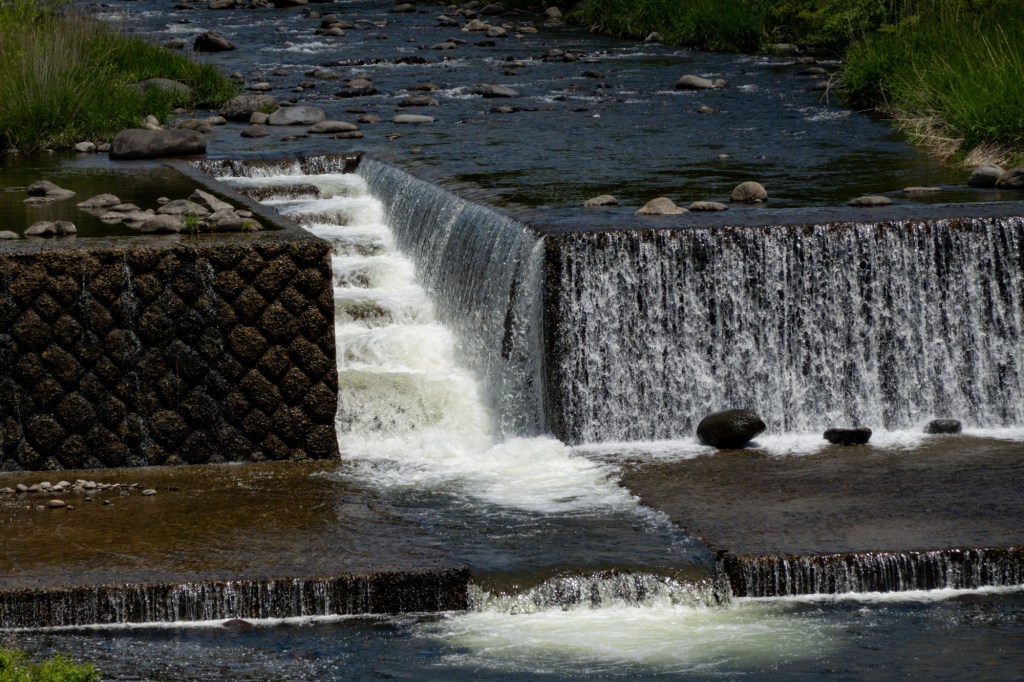
We took a short stroll along an urban river. Cheonggyecheon is an 11-kilometer (6.8-mile) restored, uncovered stream and public recreation space flowing through downtown Seoul. Reopened in 2005 after removing a concrete highway, featuring walkways, waterfalls, and art installations – a mural of a King’s progress showed inequality has a long history.

Two outdoor libraries. There’s none near us at home for some reason.

JttE Seoul D1

The relatively new direct Virgin flight gets us here by a round about route. A look at the flight path shows it avoids Russian airspace. As we can’t book in until 3 we mooch around doing the jet leg walk. Luckily we are in the Yeouido area (not the Star Wars one) which has amongst other things, the Korean National Assembly.

The National Assembly has 300 seats for a population of 51.5 million. The new Welsh Senedd next week will have 96 members for a population of 3 million.

The [ageing] population mainly lives in the urban areas – 82%. 26 million live within the greater Seoul region with a population density 3 times greater than London. Which accounts for the number of sky scrapers.

So far it feels a lot cheaper than the UK – or rather the pound goes further. A decent meal cost us 15 UKP each tonight. No tipping culture I like. Today’s weather feels like a Spring Day is Wales – damp and a bit chilly.

Wifi and 4g/5g thus far is suprisingly poor.

Feels a good place to spend of couple of days exploring.

TDA Journey to the East

Our long distance cycling trips have, thus far, been in what might be broadly described as “Western” cultures – not withstanding there are great differences to be explored. This time the differences will be, I suspect, somewhat greater. South Korea and Japan. UNESCO of course will remain a common theme of places, TESCO might not.

South Korea drives on the right, which will suit the majority of the 25 or so participants on the trip. Japan drives on the correct side, the left, which suits us. Both in km of course. It’s interesting what you find out when preparing for this trip. Google Maps up until this year does not work well in South Korea – a dispute over what they could show as they are still officially at war. Another app – Naver maps – is in common use. Phone Tap n Go isn’t as common and probably won’t work on our phones – a physical card is needed (where is it? what’s my pin?).

So here’s the blurb, which skirts over the rain to be anticipated at this time of year, and the hills. https://youtu.be/TKEt01DwnAc?si=kzJ9z3GUGrnS473K

“While South Korea and Japan are close neighbours, their lands and cultures are completely unique. Cycling across these countries, one after the other, gives cyclists an opportunity to experience each of them in all their contrasts and similarities. Both countries belong to what has been termed over centuries, the Far East, and our own journey through these regions will allow riders to discover this diverse culture; from Buddhist practices and architecture, to ancient martial arts, to an incredible cuisine, and modern, efficient, bustling cities.

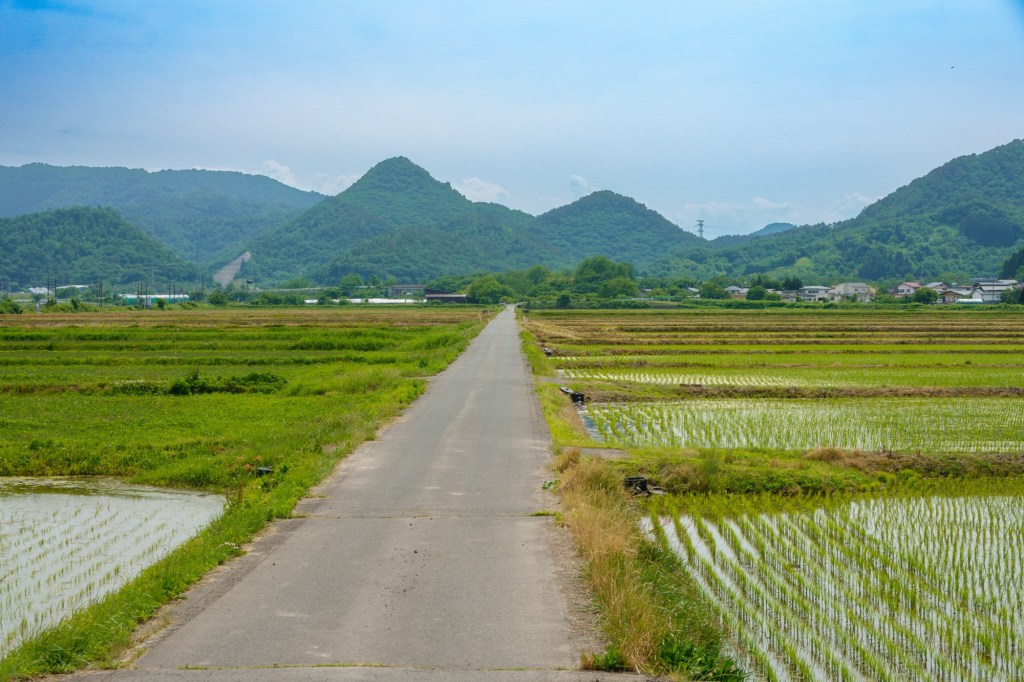
The Journey to the East will lead riders through spectacular landscapes that take in river valleys, winding mountainous roads, extinct and active volcanoes, beautiful coastlines and lush forests. The cyclists will also experience life in the small villages, towns and cities along the way. The route across the Korean peninsula and Japanese islands will provide riders with the chance to explore multiple UNESCO world heritage sites, historic palaces and secluded temples, old Samurai towns and the residences of ancient emperors.”
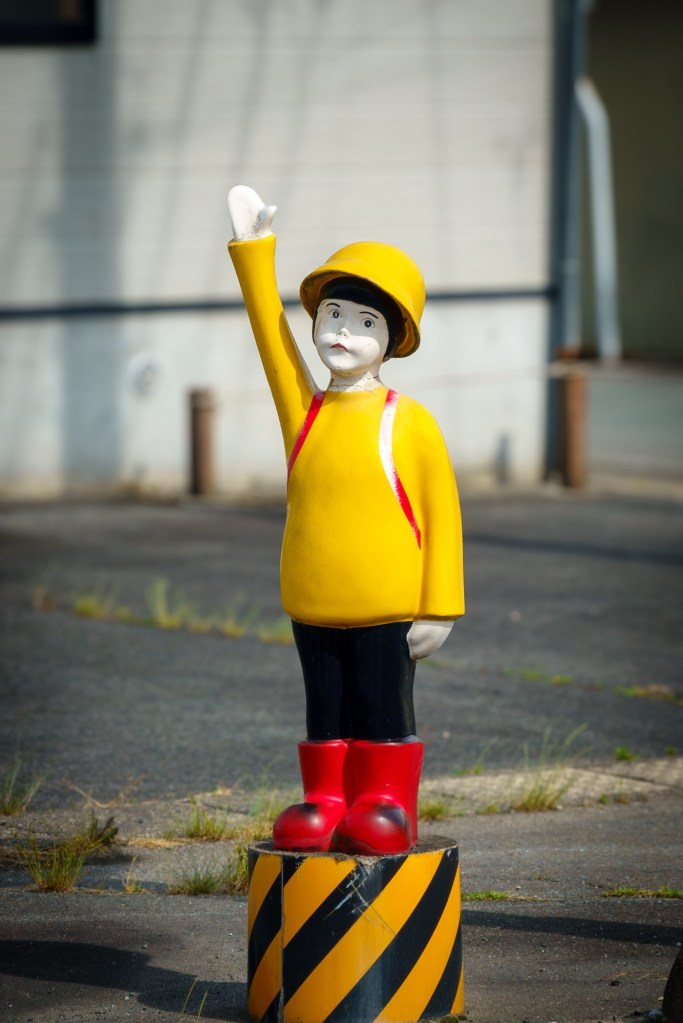
Google Translate will be hard at work, especially in elevators. 11 on steroids ?
Trans Europa Gibraltar

We’re staying here for a day’s decompression. Another European Royal squabble (Spanish Wars of Succession) and Britain gained Gibraltar in 1713 after Battle of Trafalgar. Kept it since, hence the predominance of fish’n’chips shops. Which had to be sampled.

Excellent bus services. No2 to Europa Point please. We’re in competition with the Scottish Youth Netball Team supporters who are here for the World Championships.

A rich prehistory, going back to the Neanderthals. Well earlier than that: a continuing tectonic pressure and the Rock is still rising. I hope the vast number of new highrise buildings take account of this.

A picture brings out the strategic importance of this place. Including to migrating birds crossing continents without passports.

The lighthouse is a focal point. We were fortunate enough to have access (thanks Andy and Terry) to the inner working. Dates back to the 1830’s. Take your hats off to the skills of the craftsmen who built and now maintain these unique structures.

Time to pack…..