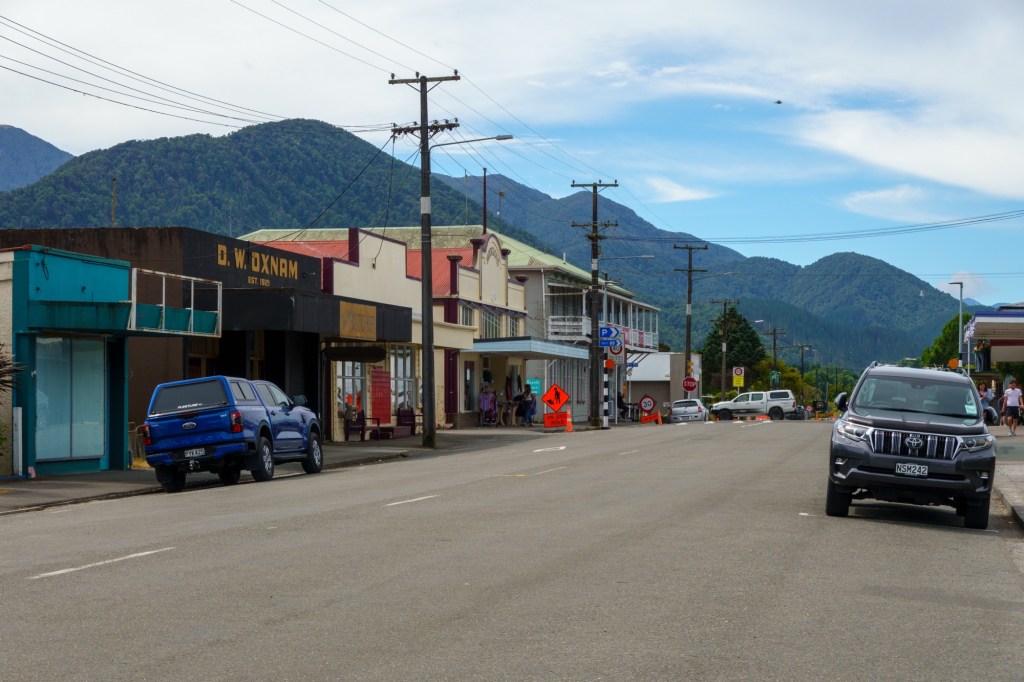
Doesn’t make comforting reading “Murchison was the epicentre of the third deadliest earthquake in New Zealand’s recorded history – 1929”. It’s a small rural town – the Hampden Hotel where we ate was jumping with Friday night revelry: they are probaby all related.



Nelson turned into quite a ribbon development along the waterfront. Recalled the father of nuclear physics, Ernest Rutherford, was born here. I say recalled – the large sign was a giveaway.


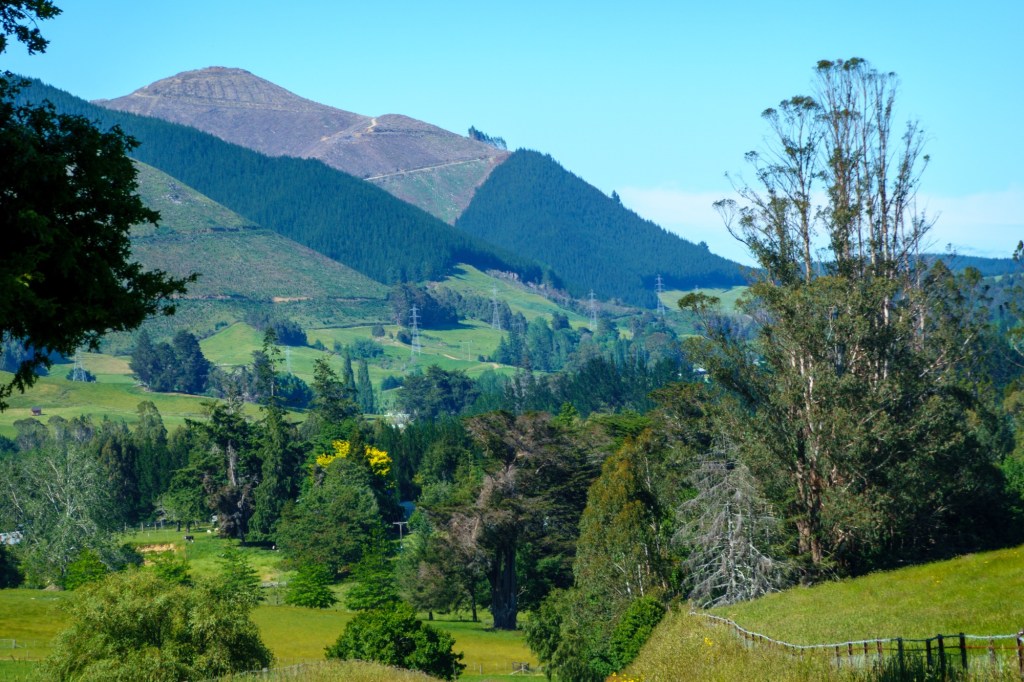
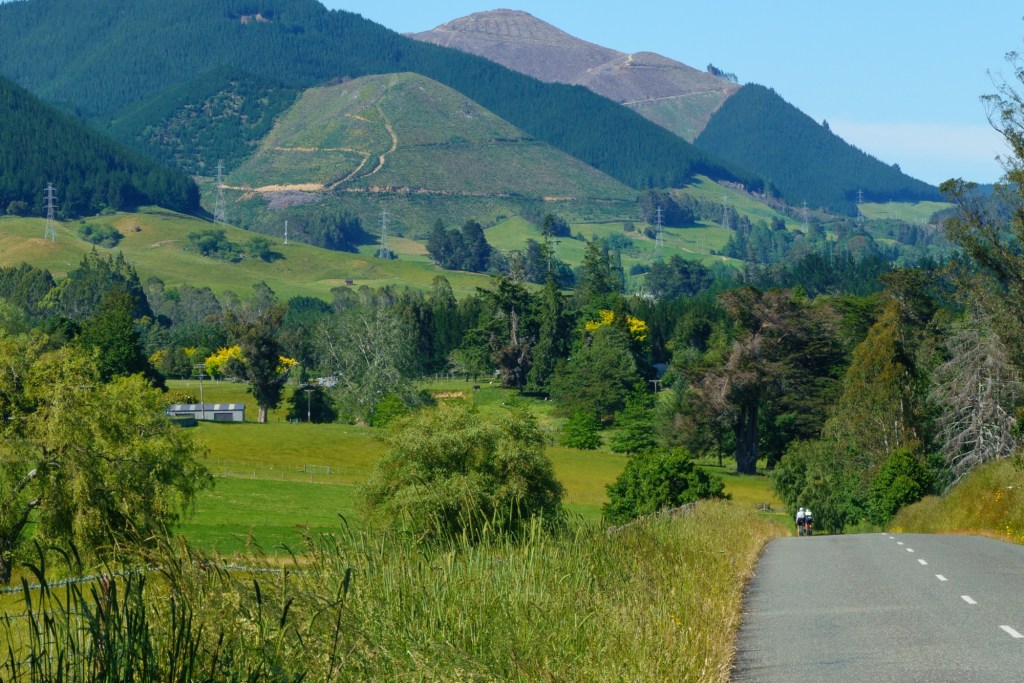
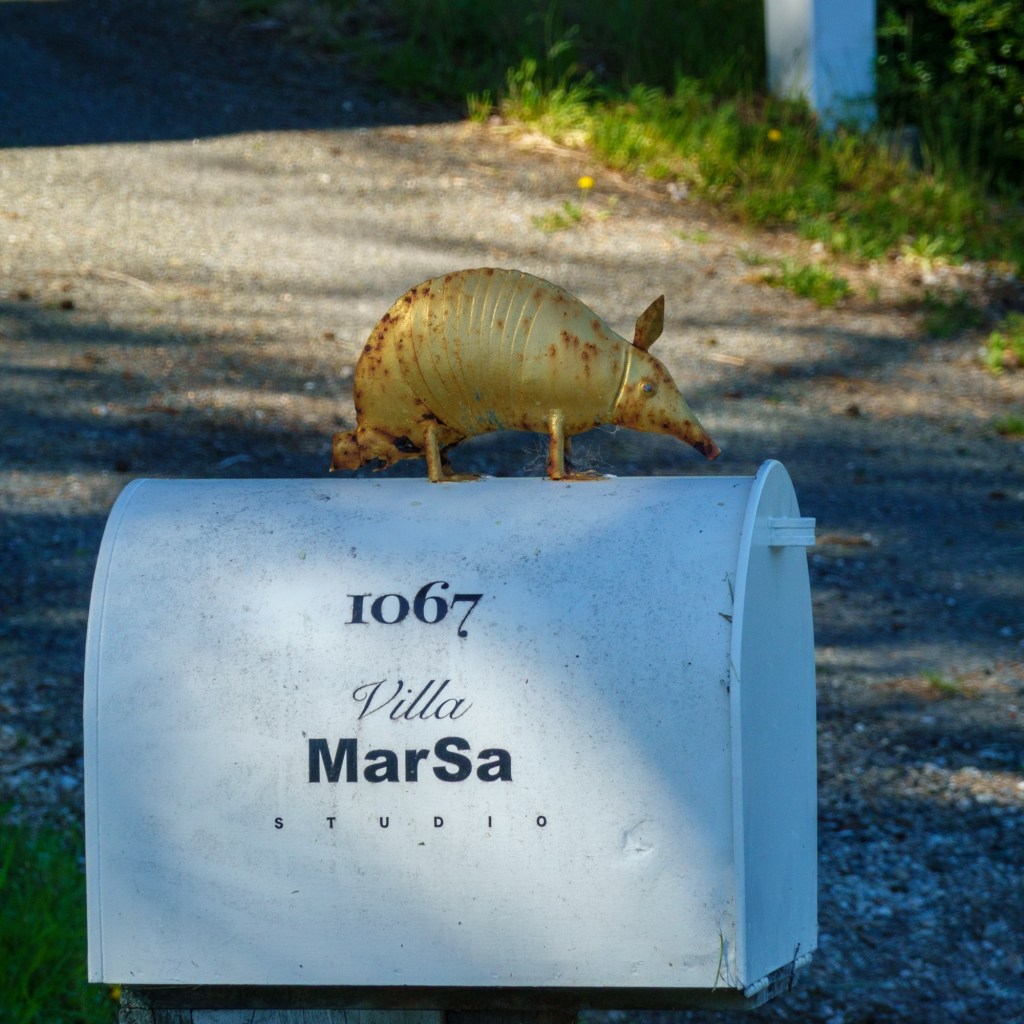
Mainly a quiet road for the first half as we ascended through the wind. A main road, OK though, as we pedalled through the descent through the wind. At least my washing is drying quickly!

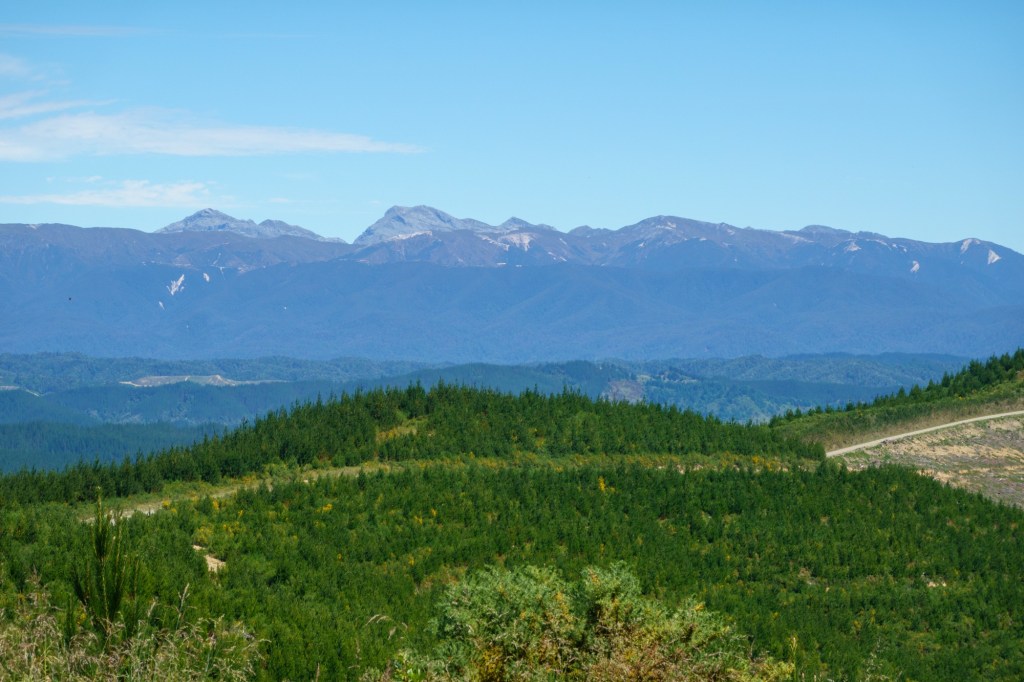

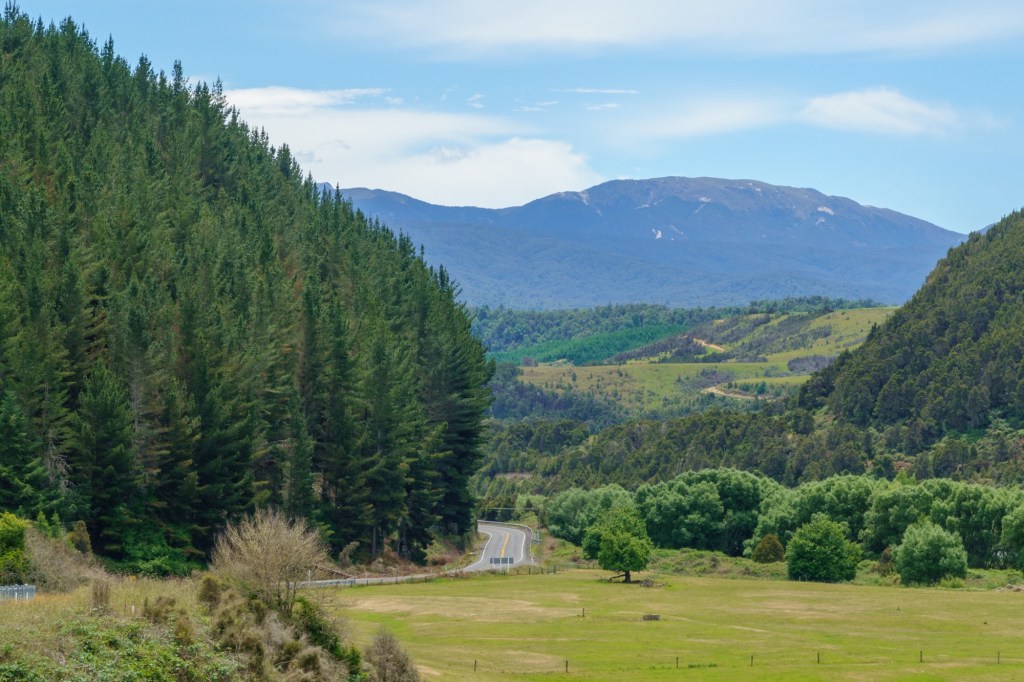
Tomorrow we head to the coast, which the person in the room next to me informs me is “hoaching” with nasty little sand flies. Time to DEET up (other products are available, I just can’t remember what they are!).
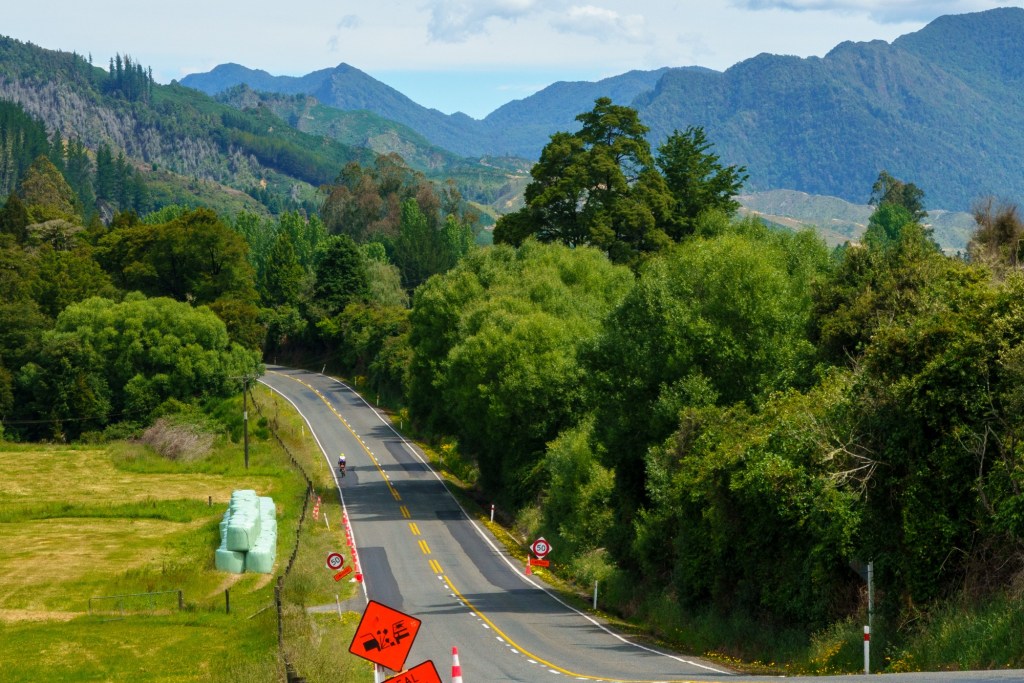
Riding to Westport and a restday. Bob has sent fascinating info on the geology. I think I get the jist…
You will follow the Alpine Fault southwestward for the remainder of the TdA trip. It isabout 40 km SE of Greymouth, trending southwestward, and goes o_shore NW of Queenstown. In topographical maps (on Google, for instance), it is a remarkable
SW/NE linear feature, usually at the base of the Southern Alps. At its northeastern end, following a significant bend south of Murchison, it continues east-northeastward as the Wairau Fault, passing between Picton and Blenheim.I’m sorry to miss Stage 48, Murchison to Westport, on Saturday. The morning ride goesthrough the spectacular Upper Buller Gorge, cut through Cretaceous granite and Ordovician metasediments. Then you’ll have lunch in or near Inangahua, before riding through Lower Buller Gorge, cut into more Cretaceous granite. You should have
spectacular scenery (if it’s not raining …).At the end, you’ll ride into the coastal city of Westport, the oldest European city on the west coast of the South Island. The Maori
have lived in the area since the 14th century.
(The granite was the bases of andesite volcanoes above a subduction zone when NZ was still part of Gondwana. NZ broke away from Gondwana about 80 million years ago.)
Inangahua sprang into worldwide prominence (at least among geophysicisits) in 1968, when the small town was mostly destroyed by a magnitude-7 earthquake on the Inangahua Fault, one of many faults in the Alpine Fault system. The Buller Gorges were
blocked in more than 50 places, by landslides and by the highway sliding into the river. With roads and communication destroyed, about 50 people hiked to Reefton, about 7 hours to the south, to get help. A huge landslide in the Upper Buller Gorge dammed the
Buller River, forming a lake more than 30 meters deep. Fearing a catastrophic erosion of the dam, authorities evacuated about 10,000 people downstream. Fortunately, when the river topped the landslide it eroded the dam slowly, averting major damage downstream.
The 1968 Inangahua earthquake had some of the highest vertical accelerations ever recorded. This may have happened because of its shallow depth, large magnitude, and probable high stress-drop. Although the highest measured acceleration was about 0.6
g (0.6 times the acceleration due to Earth’s gravity), there was evidence of vertical acceleration greater than 1 g: In a few places, boulders were resting on the ground uphill from holes where they
had apparently lain. It appeared that the ground had accelerated downward at greater than 1 g and moved laterally before the boulders landed.
A small wooden church had come off its foundation but was still sitting upright, a meter or two from its original position. Inside the church, very little was disturbed. Hymnals were still stacked on a table. It appeared that the Earth had accelerated downward at greater than 1 g and moved laterally before the church
landed.
The area also was shaken in the 1929 Murchison earthquake, magnitude 7, about 65 km north of Murchison on the White Creek Fault, part of the Alpine Fault system, which trends SSW/NNE between Murchison and Ingangahua. This earthquake happened to be in a good location: Inge Lehmann (a Danish seismologist, one of the few women in thefield in the early 20th century) looked at seismograms from around the world and in 1936 deduced that the Earth has a solid inner core.
Exam questions will follow!

 Travelling reflections