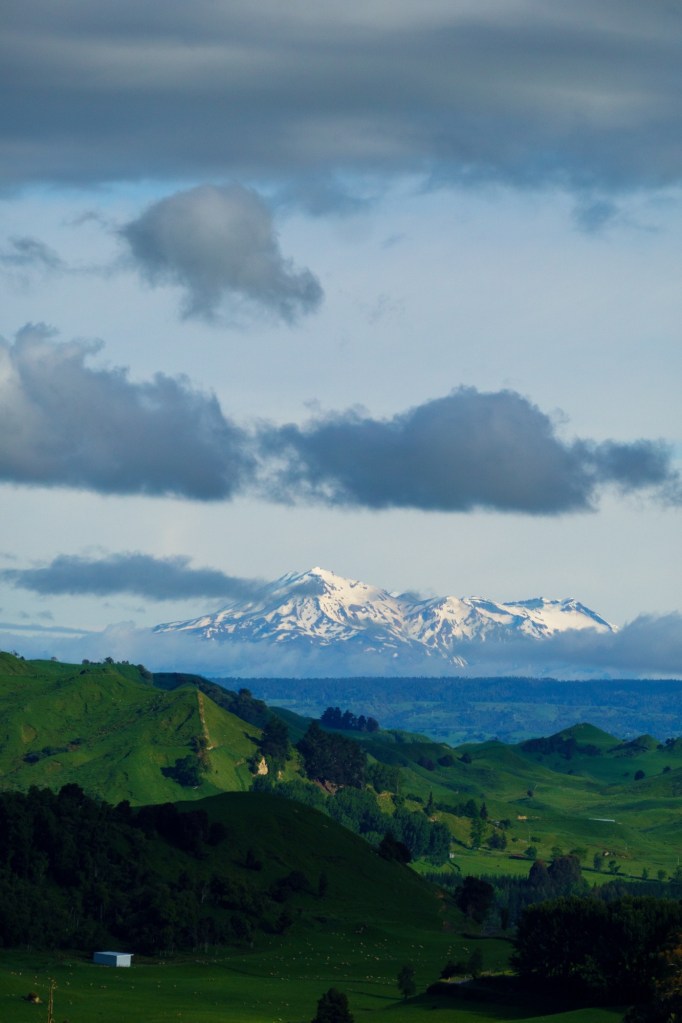
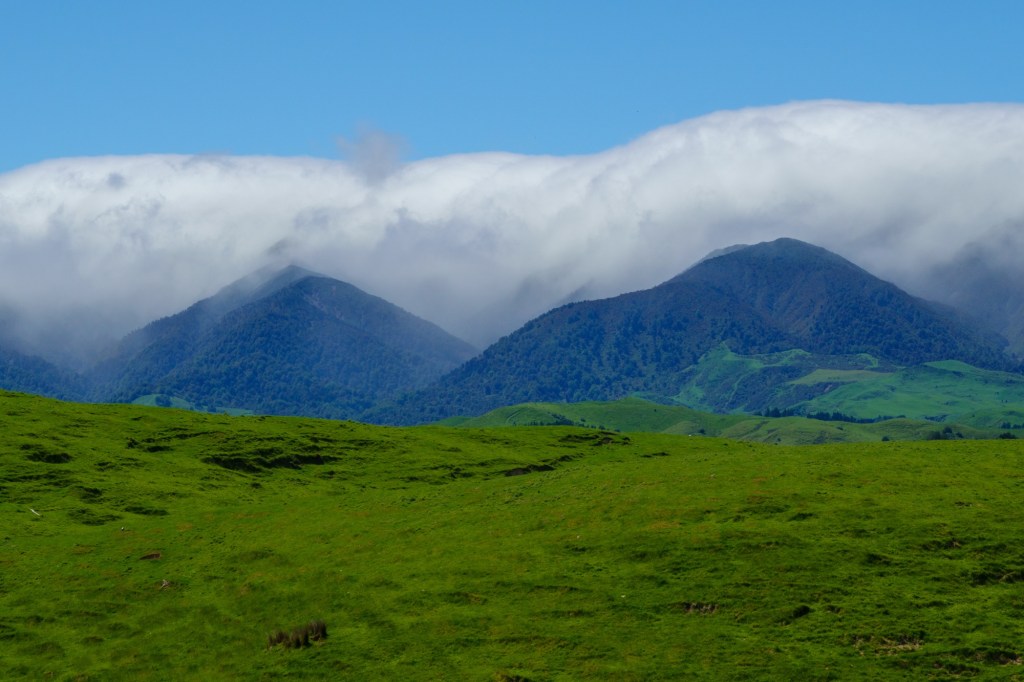
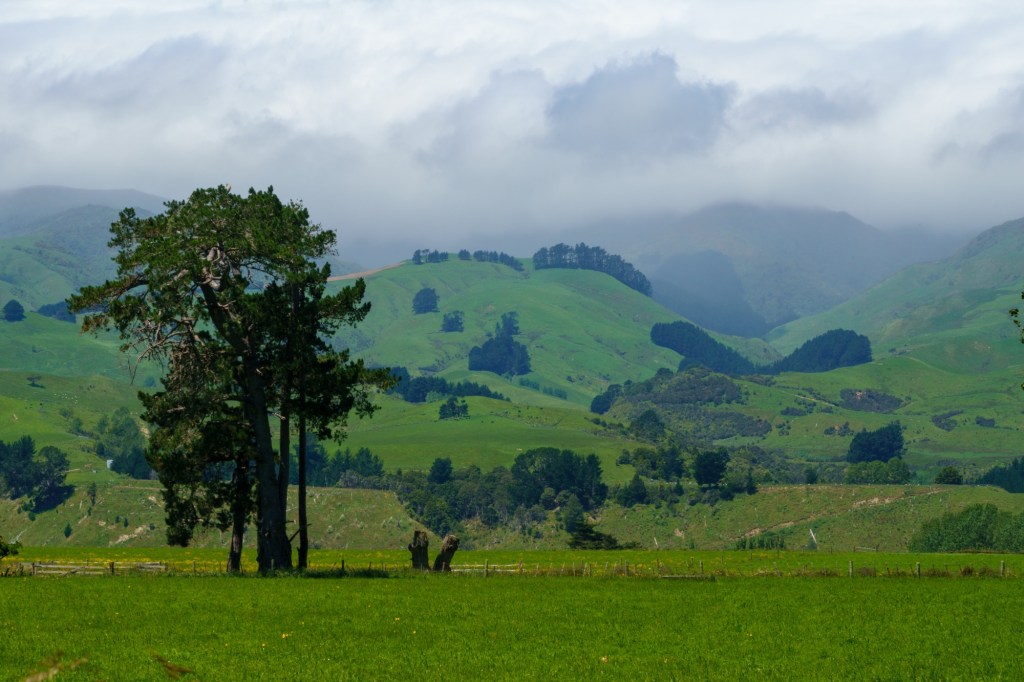
Today we followed the Manawatū River along part of its descent to the sea. Somedays it’s hard to capture in words the scenery, like today. We were spoilt with white clouds sharing the space with a blue sky, the clouds framing the distant hills.
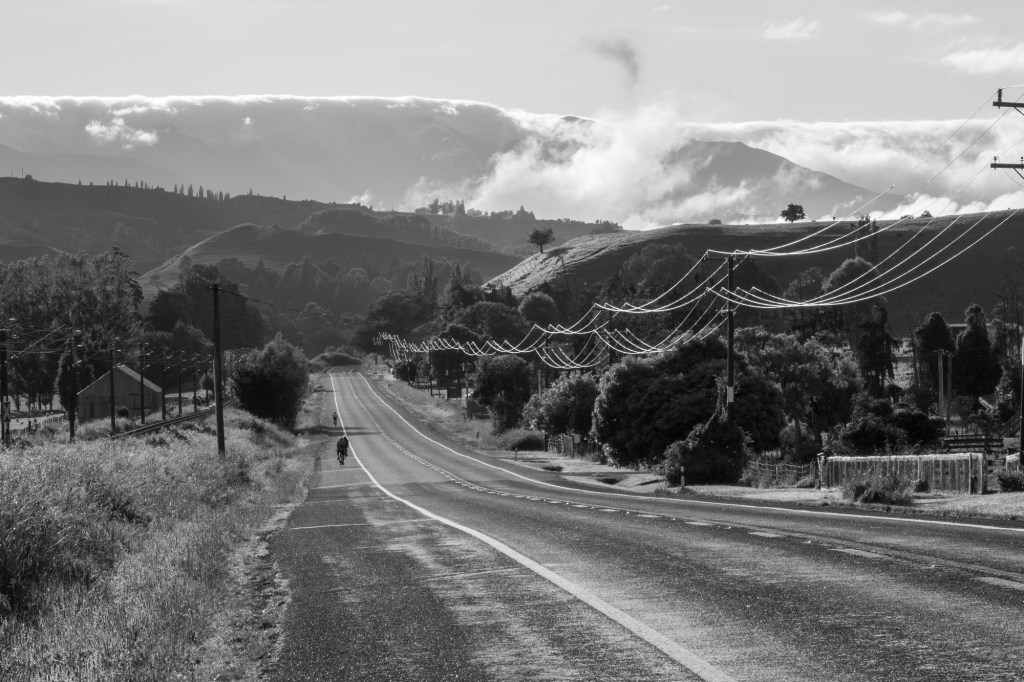


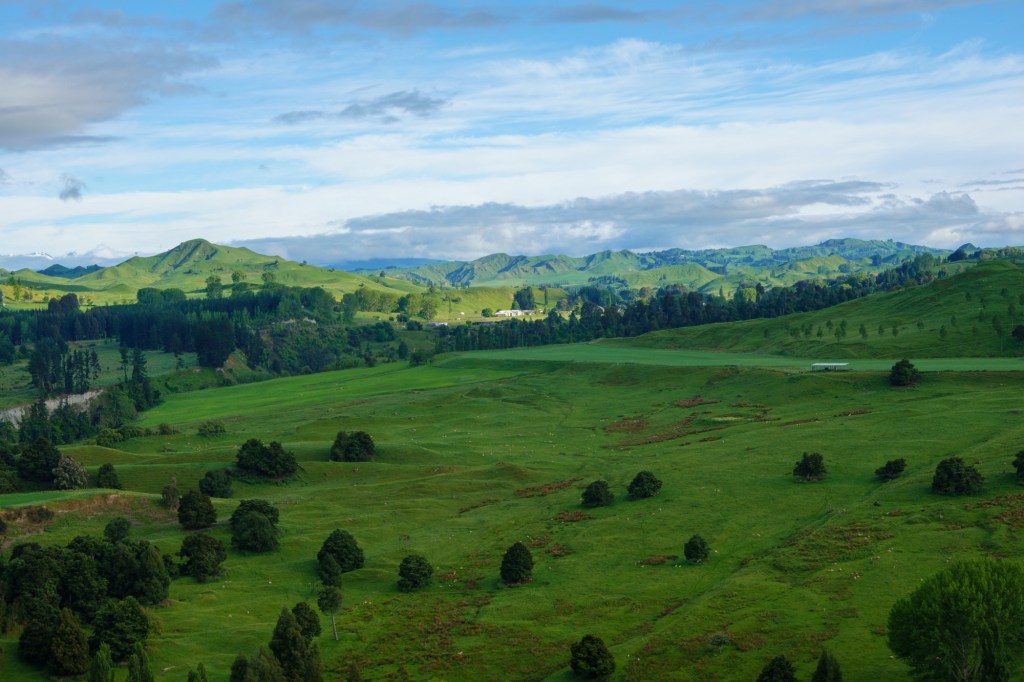


This is an area of unique geology I read – which does go to explain the hills and the gravel beds. A short river in many ways, it is also one of the fastest when it has snow melt – you can only wonder at that given the width of the river bed.
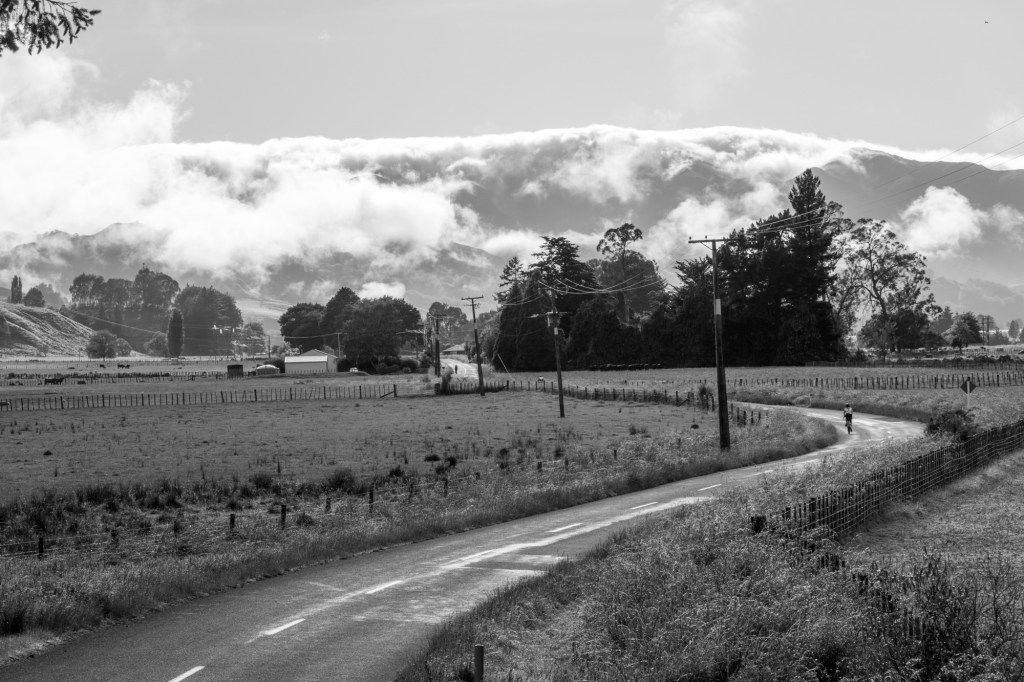

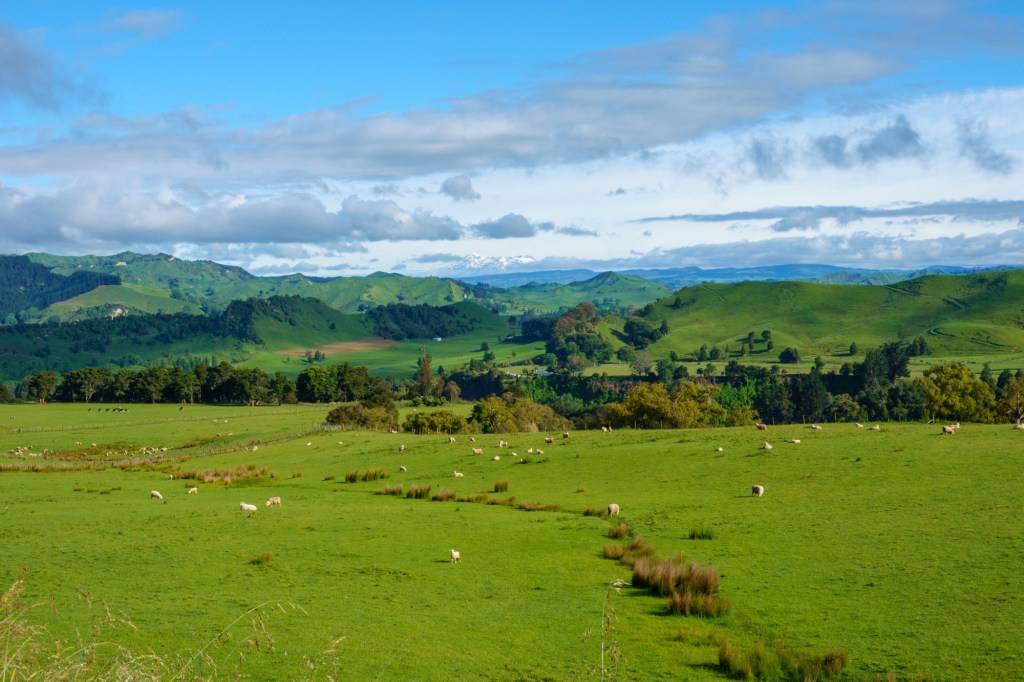
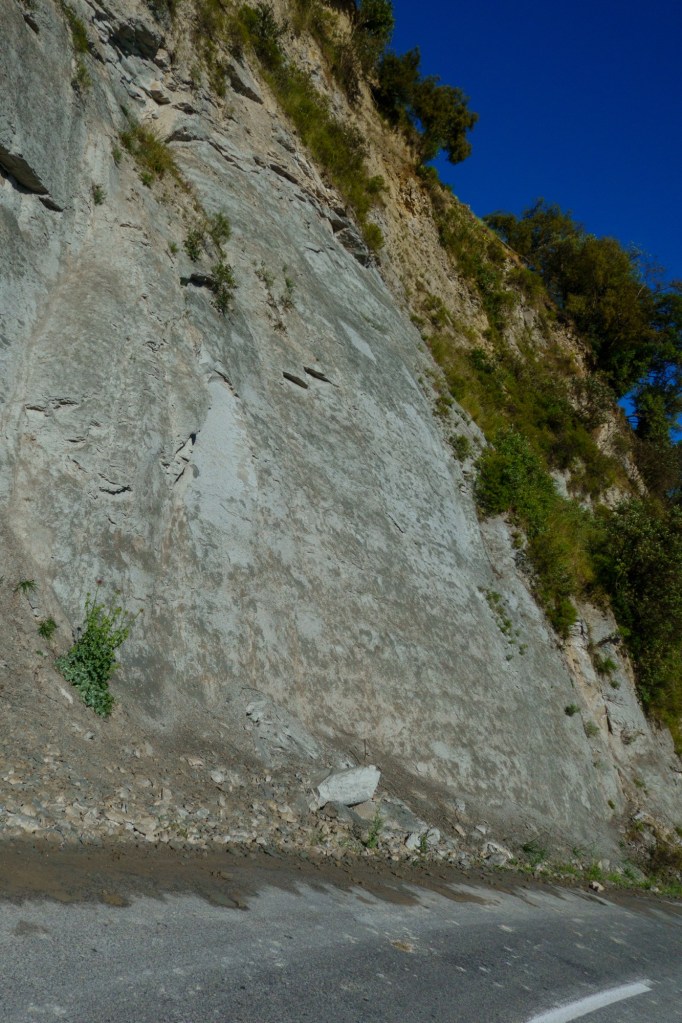
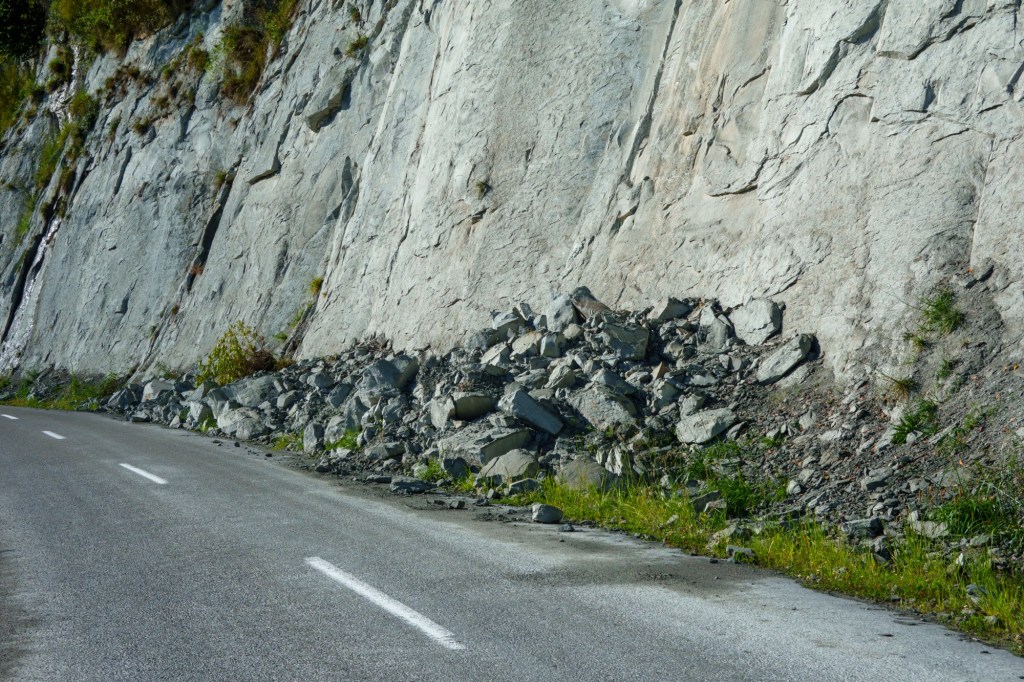
The Manawatū is unique among New Zealand rivers in that it crosses a mountain range. The river has formed a “water gap” across the mountains because it is older than the Ruahine and Tararua Ranges. Most rivers arise from an already-existing range of mountains or hills, but beginning about 3 million years ago the central North Island mountain ranges began to uplift across the Manawatū’s current course. Because it drained a large catchment, the river had sufficient flow to keep pace with and erode the rising mountains, eventually forming the Manawatū Gorge; other rivers were unable to and were diverted into the Manawatū instead.
After exiting the Manawatū Gorge, the river carries rock and sediment down from the mountains. During glacial times, with the prevalence of ice, snow, and bare mountains, this erosion increases and forms a stony elevated terrace. During an interglacial, while the mountains are forested, gravel outwash is reduced and the river cuts down into the terrace, forming a gorge. This cycle has created four distinct terraces between the Manawatū Gorge and Palmerston North.
The Manawatū Plain was seabed 5 to 6 million years ago, and as it was raised above water by the action of the Australian and Pacific Plates it buckled, forming five long and low ridges (or anticlines) parallel to the mountains, which impede the flow of the Manawatū, Rangitikei, and Oroua Rivers, forcing them to flow southwest rather than directly into the Tasman Sea
The route went up and down to the river many times. The cycling was a bit like the Cornish or West Wales coast. No coffee stops for the first 120km – remote farms alongside the road.

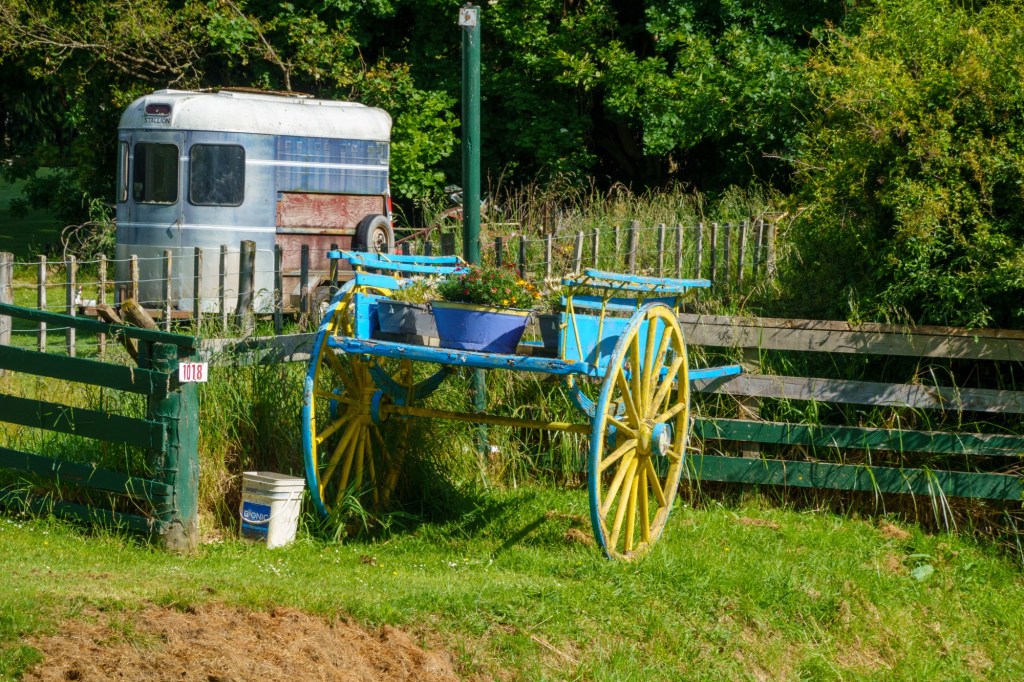



The old guy who ambled past my table outside the coffee shop put a lot into perspective. “I’m just a sad lost soul, they’ve all gone. My friend used to sit where you are everyday with me – she’s gone too”. He came across here when he was 5 from Northern Ireland. I told hime he still had his memories – he smiled and said “yes and they are up the wall, they’ve all gone: stay safe with your cycle and enjoy”. And with that he ambled on into the shop. Reminded me of the John Prine song “Hello in There”.
“So if you’re walking down the street some time and see some lonesome eyes; don’t pass em by and stare, as if you didn’t care; say hello in there, hello.”
I’m glad I stopped to listen and say hello.



Tomorrow into wine country as we go to Martinborough.




 Travelling reflections