Day 4, Leeuwarden to Delfzijl: Copenhagen

As it gets more rural, with greater distances between places, the desire for coffee shops and ice-cream intensives, only to be sated in the main city, Gronigen. Never far from water, lush green fields abound.
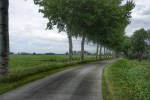
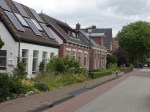
Now if you’d asked me, I wouldn’t have thought of Holland and thatched roofs. Perhaps logical, given the relationship with the Fens and Broads. Here huge roofs sweep down and thatch covers tiles or corregated sheets. Often it only covers three quarters, presumably the bits that need insulated.

Bikes seem to assume right of way over everything, including each other. There must be a secret code or signal to agree who goes first.

Here is our route

Day 3, Den Helder to Leeuwarden: Copenhagen

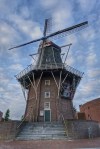
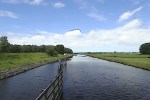
Soon we’re crossing into Freisland, which must translate as flat. Most of today is below sea level, an excellent tailwind, with a third of our day along an 8mile causeway. This turns out to be a birdlife haven. The parcel of oystercatchers make a fine sight as they align in perfect formation to minimise the wind. No doubt this will has been adopted in the windmills that keep the water pumping.


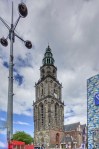
Although very flat, the landscape is never boring. Punctuated every now and then by pretty, and well manicured, villages make the most of their canal features. They feel lived in Vs tourist.

Leeuwarden has just completed its turn as European City of Culture. That had passed us by until now. Arriva buses appear, hopefully more punctual than the service we get.


This slideshow requires JavaScript.

This is our route

Day 2 Ijmuiden to Den Helder; Copenhagen

Leaving the hills of the first day behind, North Holland stretches out like a bit of rolled pastry ahead of us. First we navigate the steelworks, now owned by Tata. Is this a crafty two way Brexit hedge position? The surrounding towns are quite different in feel to the surrounds of Port Talbot: a lot brighter with more space.

Again we are reminded of how cycling is the norm. People cycling in normal clothes along traffic free avenues. The occasional alium field draws the camera’s eye. The dune/dyke system dates from 1610, hopefully well maintained as most of today is below sea level.

This slideshow requires JavaScript.

Den Helder is the home of the Dutch navy. Think one of the two ships was kind out at sea today, probably looking for the British fleet – that’ll keep them at sea for a whole then.

Here is our route

Day 1, Hook of Holland to Ijmuiden: Copenhagen

Reflecting that Dutch is a similar language to Welsh, to play Scrabble with, we set off to tackle the hills that are ahead of us. Stopping in the Hague for a coffee and to recall a stinking hangover after a soiree at the Ambassador’s residence some years ago, we caught up with the final destination of the Volvo Ocean Race.

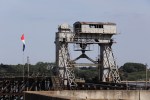
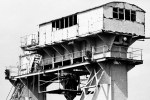
A common theme with Harwich is bunkers. Unlike us the Dutch haven’t turned it into a personality trait. No doubt in a year the draw bridges will be up and customs a chore to navigate (grrrr).

We hadn’t expected the Highland cattle nor the cheeky fox. Bikes had been expected though perhaps not in the sheer volume and variety, nor motopeds using the cycle paths. Rohloffs abound. It’s fantastic to see how the infrastructure is not just bike friendly, it’s bike biased.

The landscape art interrupts the views of the sea, telling the tale of the people. On the day Mackintosh’s masterpiece seems to have died, it was good to reflect how art frames our lives: memories etched forever.

This slideshow requires JavaScript.

We end up in steel town, though at a prettier marina than Port Talbot offers. A similar beach to Aberavon: the beer is more expensive!

Here’s our route.

An old Penisular Days -1, 0 Copenhagen

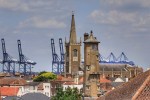
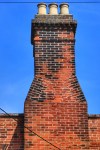
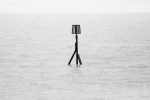
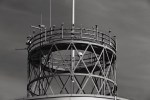
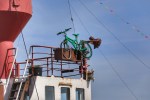
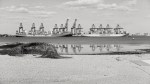
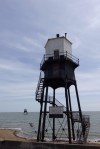
You get to Harwich via the politically incorrect town of Manningtree. Harwich has more going for it than I can remember when we set off on the original leg of the North Sea Cycle route in 2002(ish). This time we’re heading across to the Hook of Holland to catch some more of the route via Copenhagen. Navigation aids abound, framed by dominant Felixstowe at the junction of the Stour, Deben and Orwell.

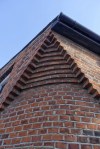
Some fine medieval streets mixed up with some newer bitsnpieces, blending in with Dovercourt. Where do place names come from? Perhaps those were the thoughts of the Pilgrim Fathers as the set sail on the Mayflower; Samuel Pepys’ pen may have hovered with such reflections.

Convincing ourselves the English flags are waving for the world cup, vs in support of the prominent UKIP offices, there is an active community here. Most visibly, the Harwich Society has done fantastic week on the Napoleonic defences. Even the Beacon Hill fort left over from WW11 is having a makeover: volunteers just ignore the daunting scale of the task and make a difference.

This slideshow requires JavaScript.

The best thing that can be said about Harwich International is pass through.