A day of two halves. Adelaide’s galleries followed by bike reassemble.
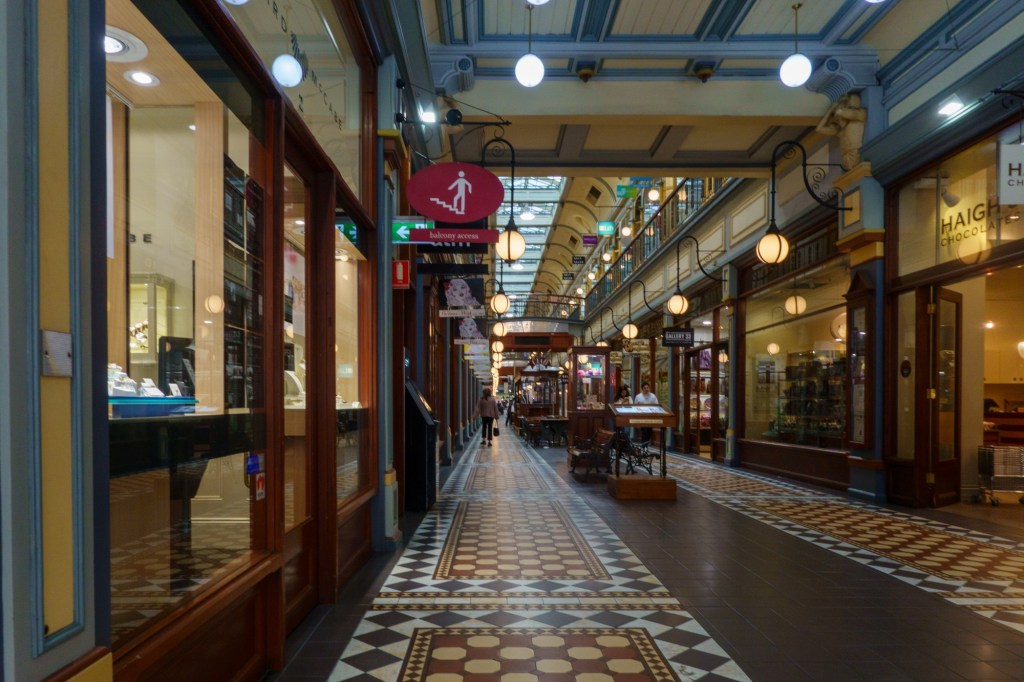
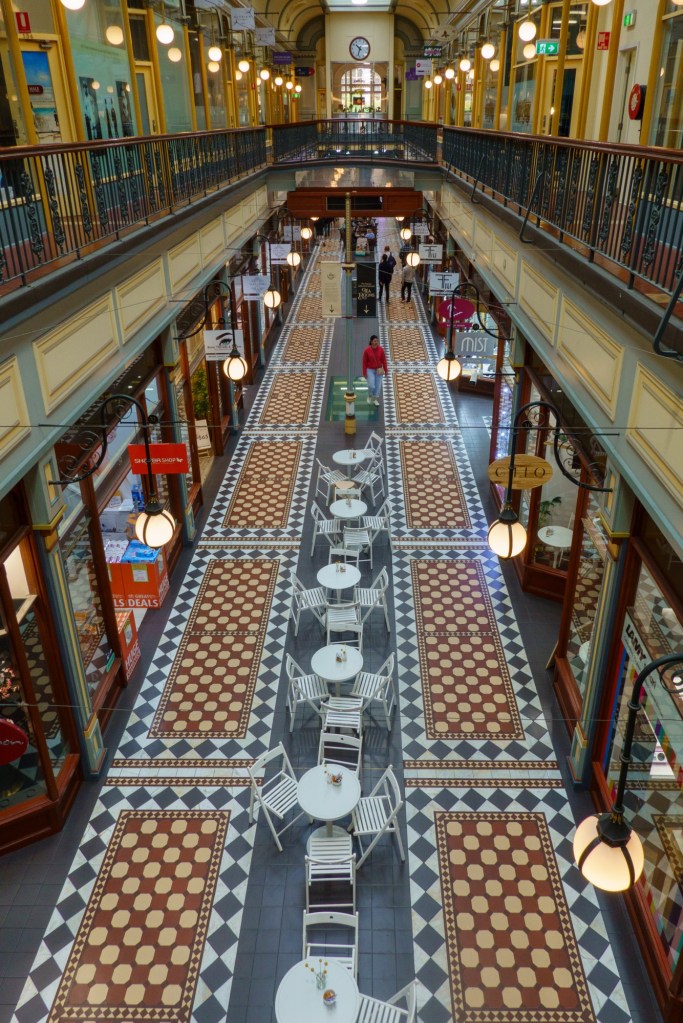
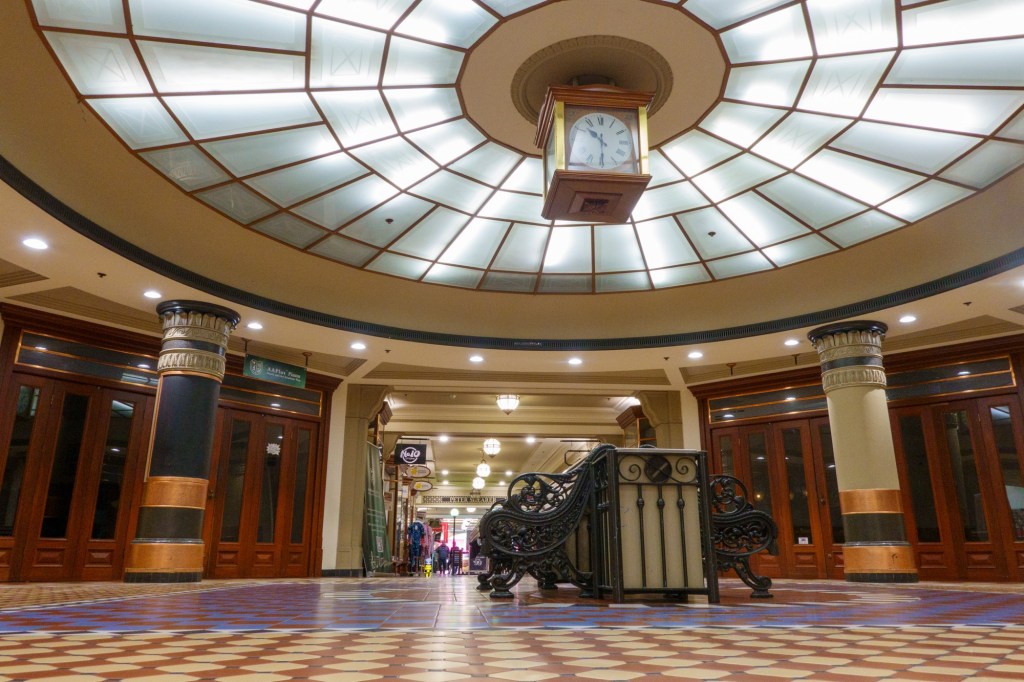
Adelaide’s old arcades are a joy. Opening 1885 and built in 5 months by 200 workers, it does make you reflect why things take so long these days to complete. With adaptions to changing fortunes (and a fire) 1930s art noveau dominates. They do what good arcades do: shelter small independent shops and niche products.
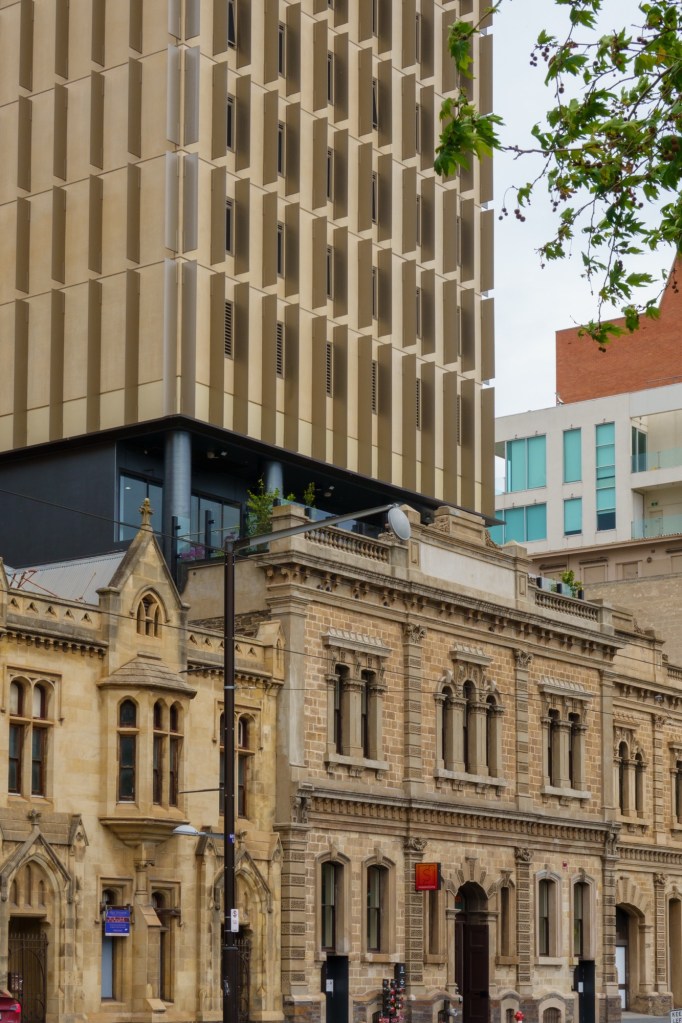
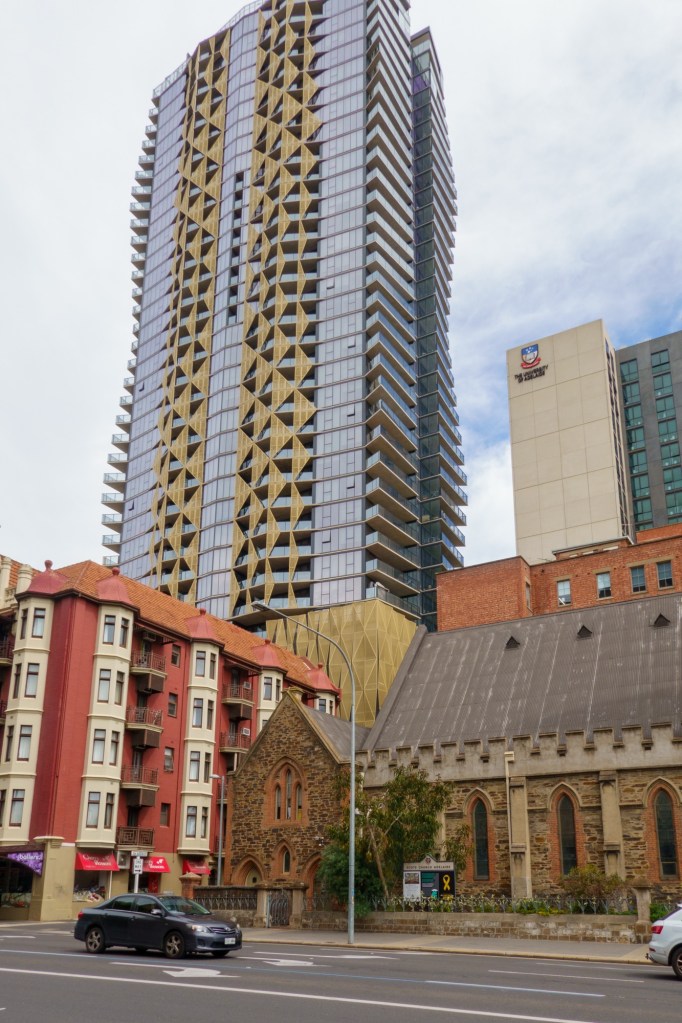
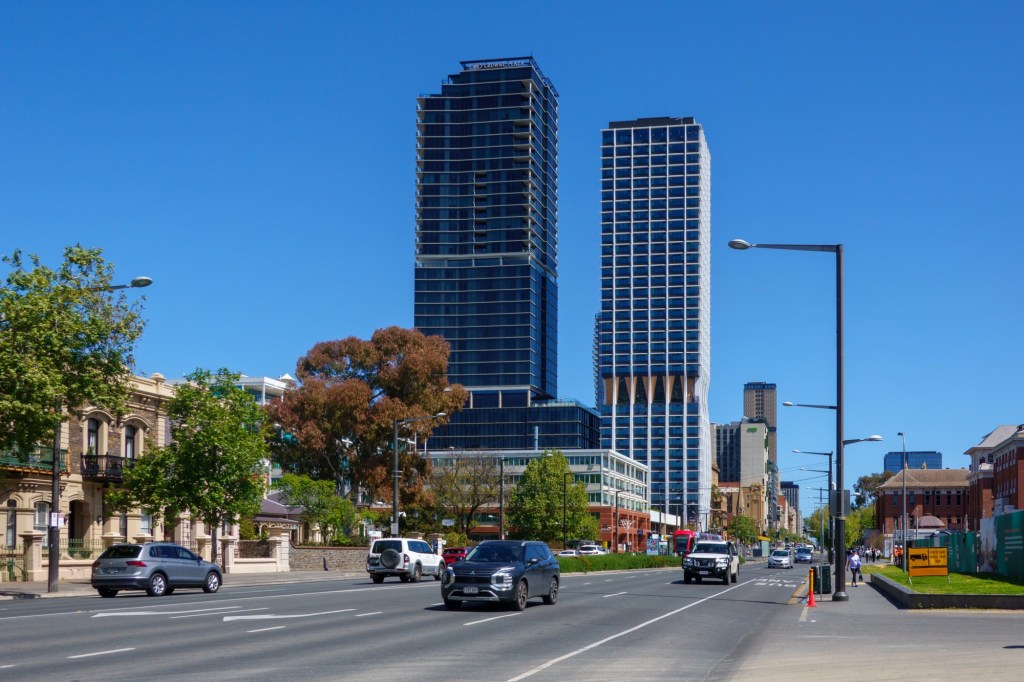
Looking up in cities shows the changes. Old facades harbour skyscrapers; old names tell of previous use. They seem to have done a good job here at juggling preservation, conservation and modernisation.
The South Australia Art gallery makes an impression. Its cake of the week is a recipe to return to. The Adelaide Museum’s Aboriginal wing illustrates quietly yet powerfully the richness of cultures trampled over.
Then to bike reassemble. Including the scissors making a clean cut of a finger, now neatly bandaged. Other emergency repairs will be made on Barbara’s handlebag holder. Clean machines now await posteriors.
Bike building metaphor
First rain to remind us of home: so far we’re the only bikes sporting mudguards as a permanent touring feature.
Thought of the day from Aristotle in the art gallery: engage on 3 levels to communicate. Pathos (emotion); logos (logic); ethos (ethics). I’ve already engaged pathos in replying to a “are you from England?” question from a fellow cyclist. Logos and ethics held in reserve, though as he comes from Wessex the latter might not work.
Glenelg was our focus today. The last time we were there we visited the stunning brochs, wondered at the old barracks whilst getting our breath back from the cycle over from Inversheil. All the while hoping the world’s last working turntable ferry would be running to take us and our bikes across the Minch to Skye the next day. So a high expectation of its southern hemisphere namesake.
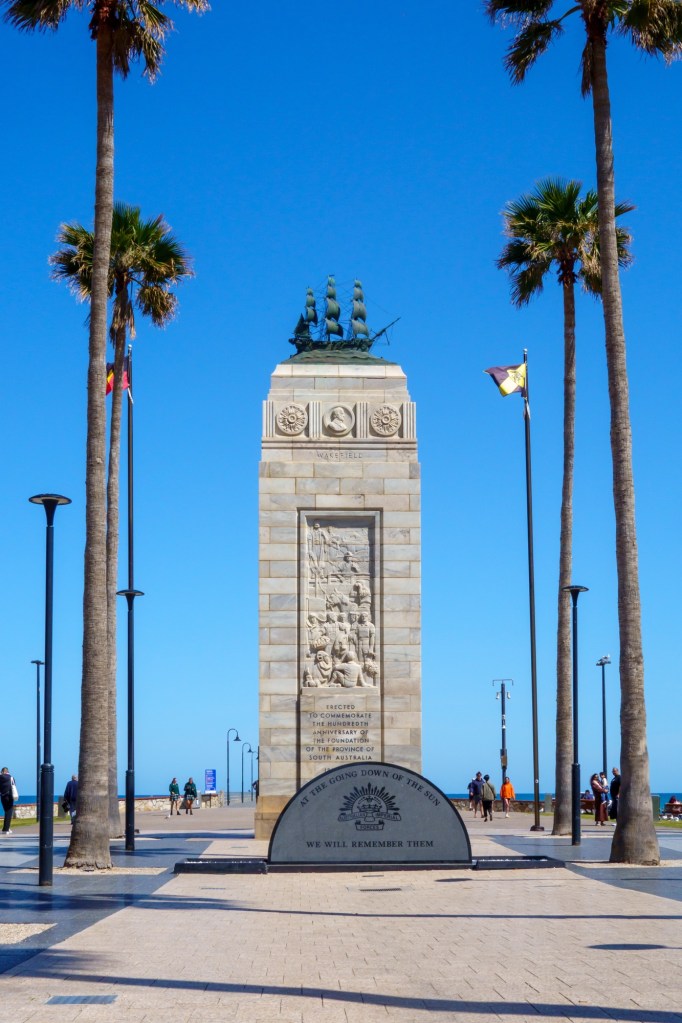
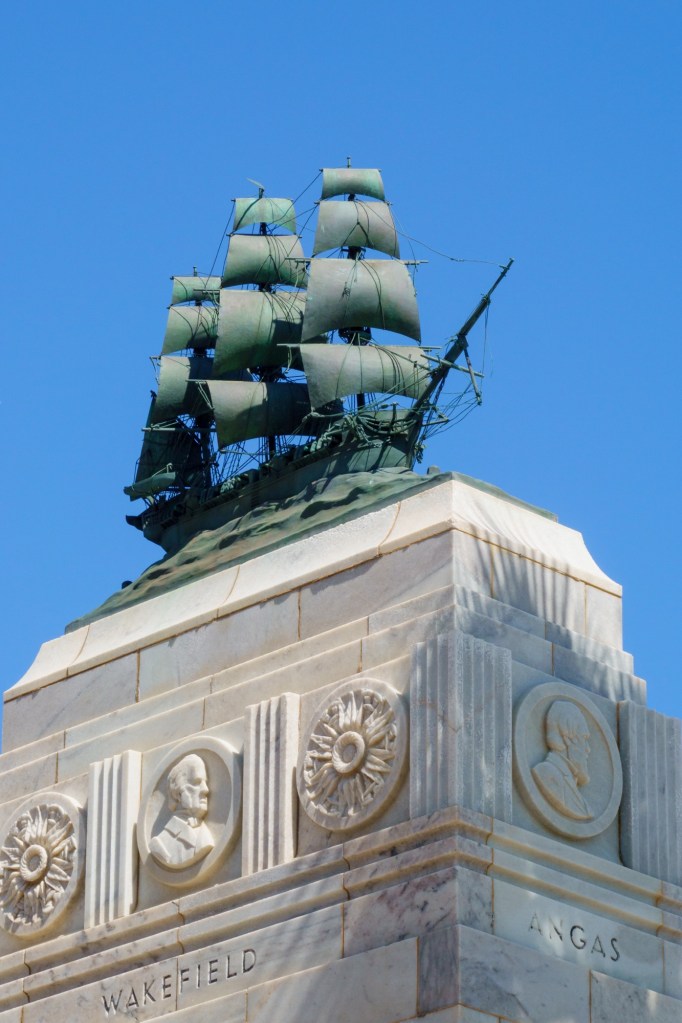
Celebrating Glenelg’s founding
Which it turns out is the only thing Glenelg, South Australia, has in common – and it is not named after a descendant immigrant. Rather Lord Glenelg – who held a position in the Govt to do with grabbing land. (He was also the one and only person to hold that baronacy). It was the landing place of HMS Buffalo and the scouting party of Col William Wright who established Adelaide, named after the wife of King William IV. Circa 1832.
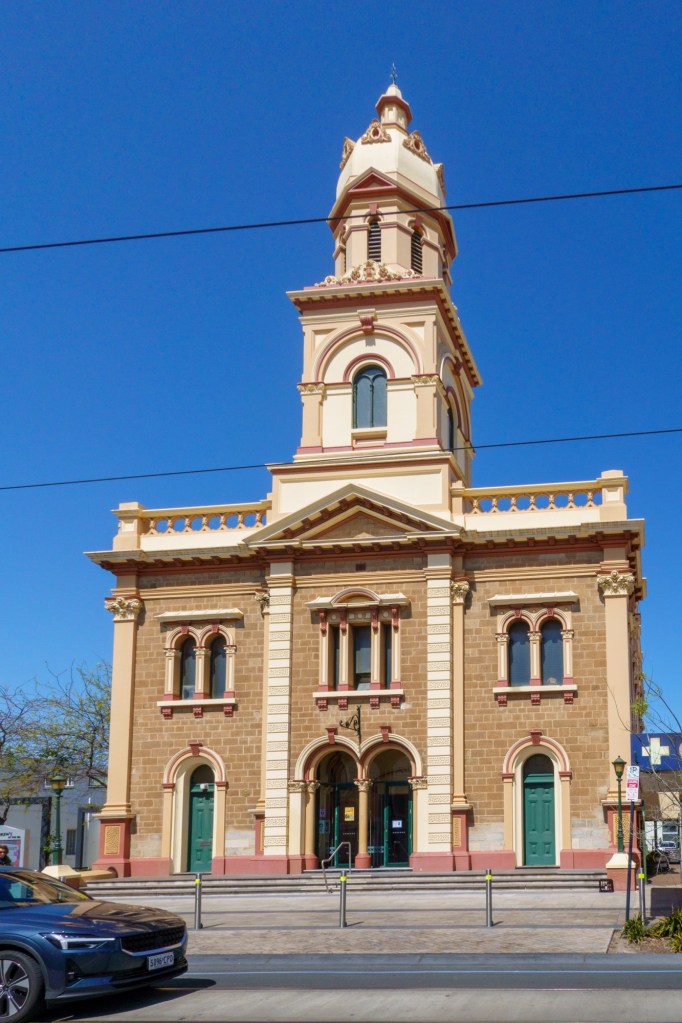
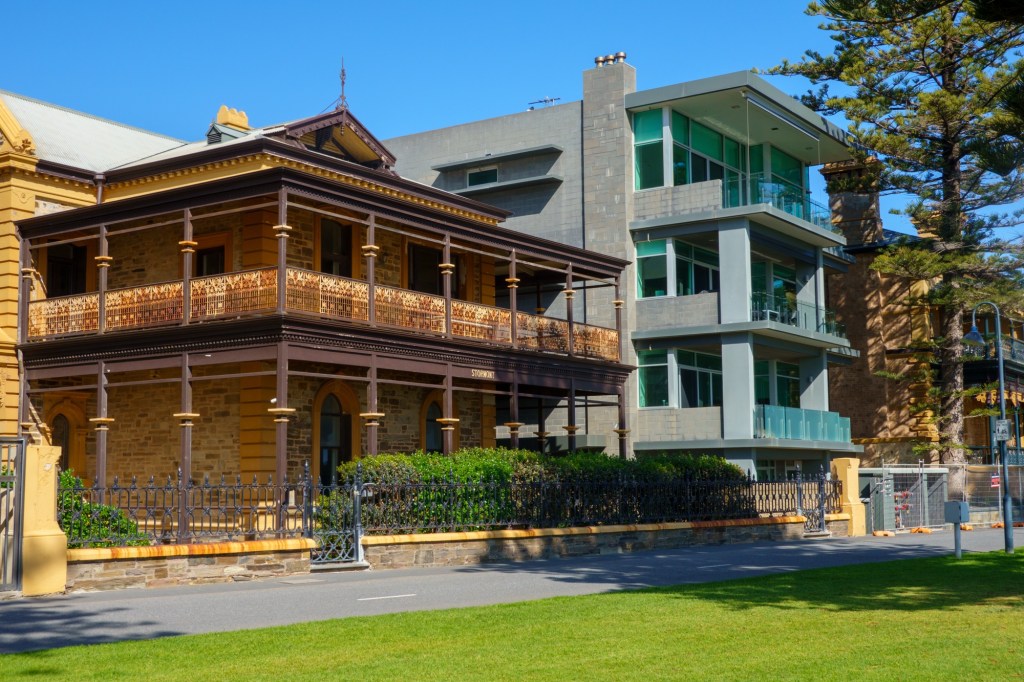
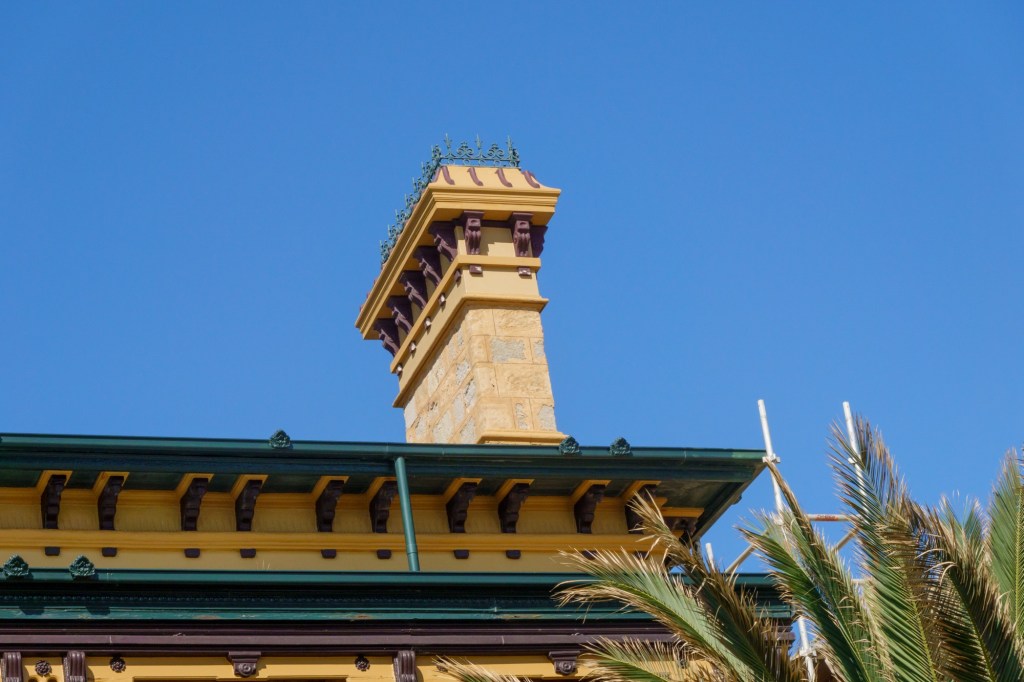
Lost to a gambleSpeech therapist of King’s Speech homeFirst cinemaHeritage
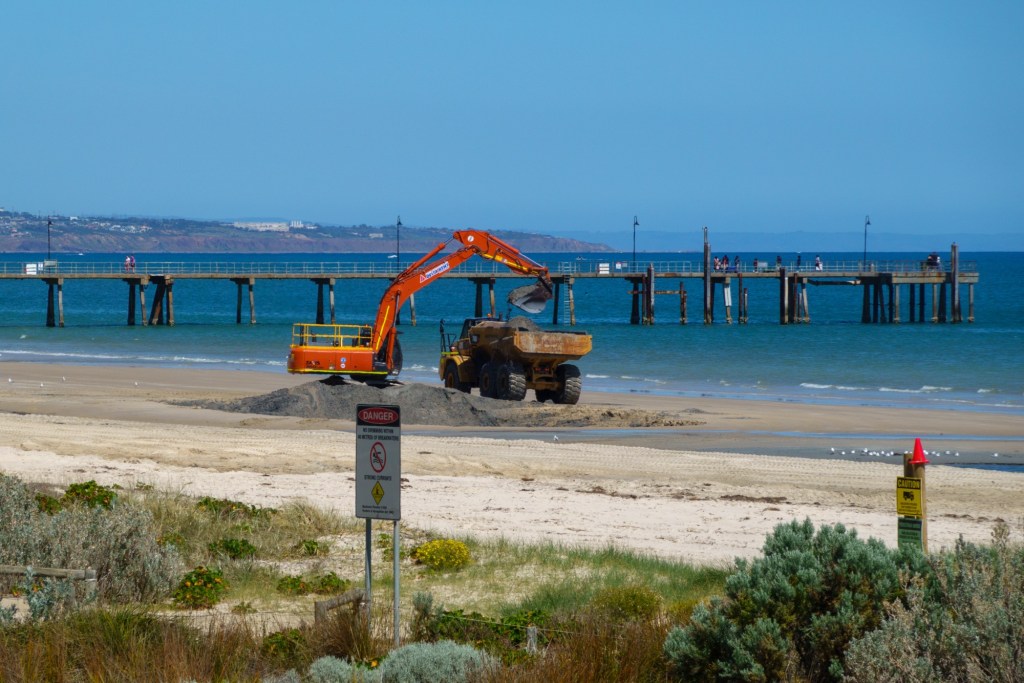
Today it’s a pleasant sea-side town with a lot of development around the few remaining original buildings. Not to forget a sand pumping station to move sand to beaches which need it. I think it’s probably the people on the beaches who want it but who am I to argue with the drafting of the sign?
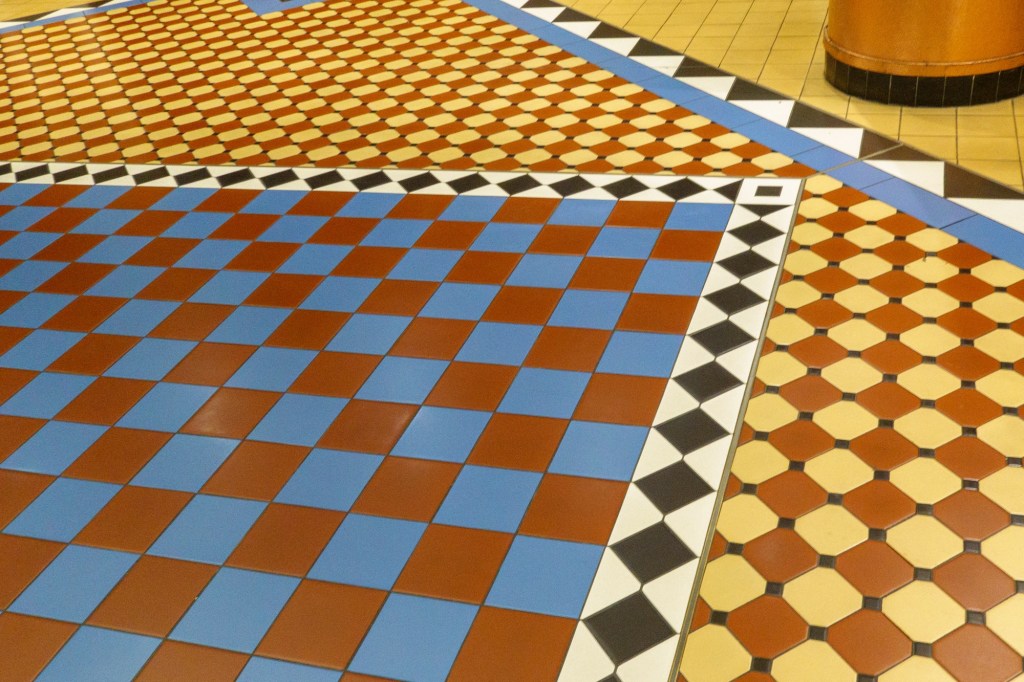
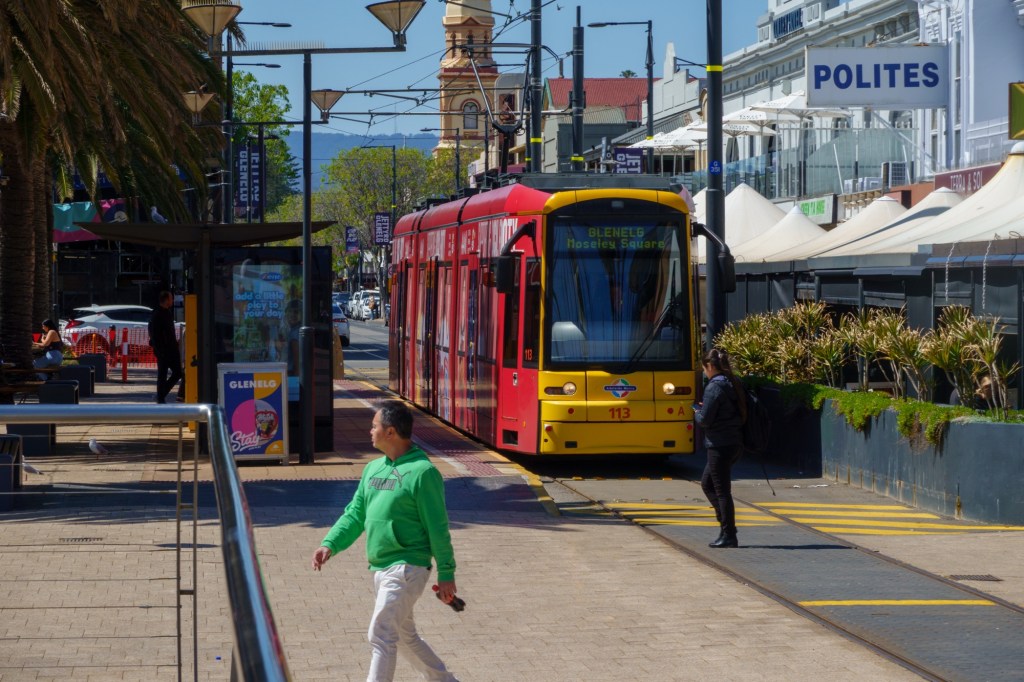
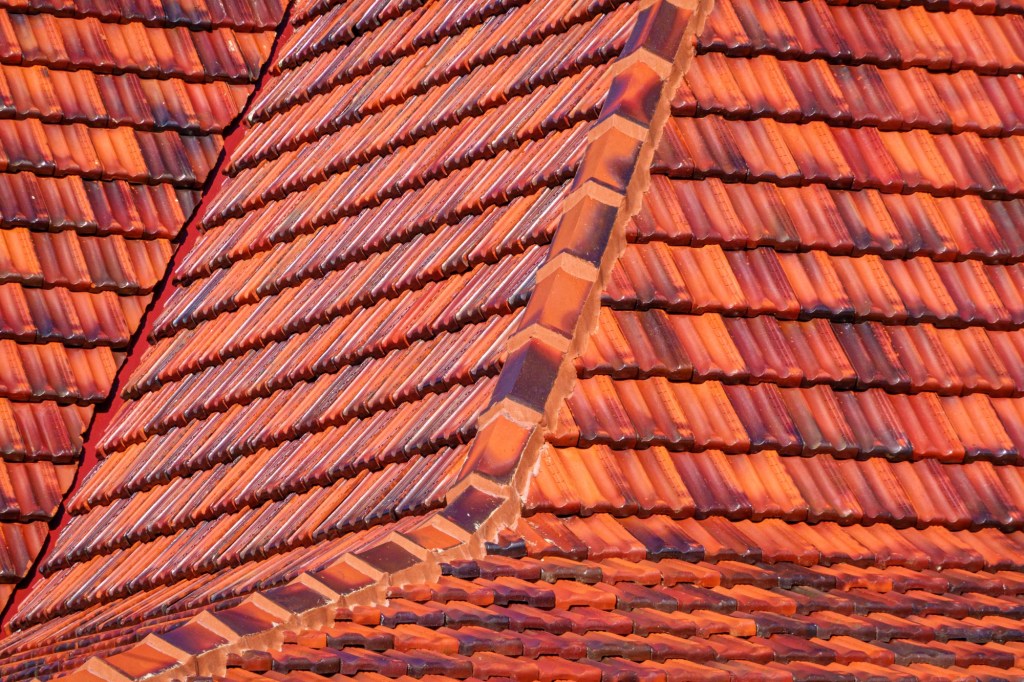
Melrose, famous aviatorSand pumpingToday’s tramJust tiles
Not ignoring shoving the Aborigines off their land, it is amazing how it took such a short time to develop. Within 20 years it had brick buildings (churches and free masons of course) and by 1870 a tramway (still in use though cashless these days).
Last seen in Portland Bill
Still appreciating and learning the differences between UK and Australia. Coffee: piccollo is new to me; americano is like a large expresso; restricted expresso is made with less water and used to remove teeth enamel. Low alcohol beer – my med limit – so far is only Heineken the pits. Very little litter anywhere. More diverse than we see in South Wales. Tipping is not expected – just as well!
To continue a thread aka rabbit hole: time zones. These can be traced back to the standardisation of train times from 1840 onwards. Great Western kicked it off, using GMT as the standard instead of the local station time which was based on solar time. It took until 1880 for a unified time system in the UK to be legally adopted. 1884 saw a Washington conference adopting 24 times zones for the world. A few places resist – such as this Australian State. Now you know, an even briefer history of time.
We spent today learning the buses, admiring the Adelaide grid pattern and some fancy glassware in the Botanic Gardens. Rundle Street just happens to like a t.
Clear linesVariety of agesUseful codingPurple not as popular
Buses: frequent and cheap. 50p for 2 hours travel on all city routes. A free bus around the perimeter of the central city district. A bus driver who forgot to remind us to get off. He then told us he’d called the bus on the other side of the street who was waiting for us.
A city developing from around 1832 on a specific design of wide avenues, a grid system and parks. Which persists until today. Relatively quiet roads, indeed the traffic is light generally. The Central Market is a proper working one – lots of colour and noise. The Portuguese tarts maybe a new addition, long may they last.
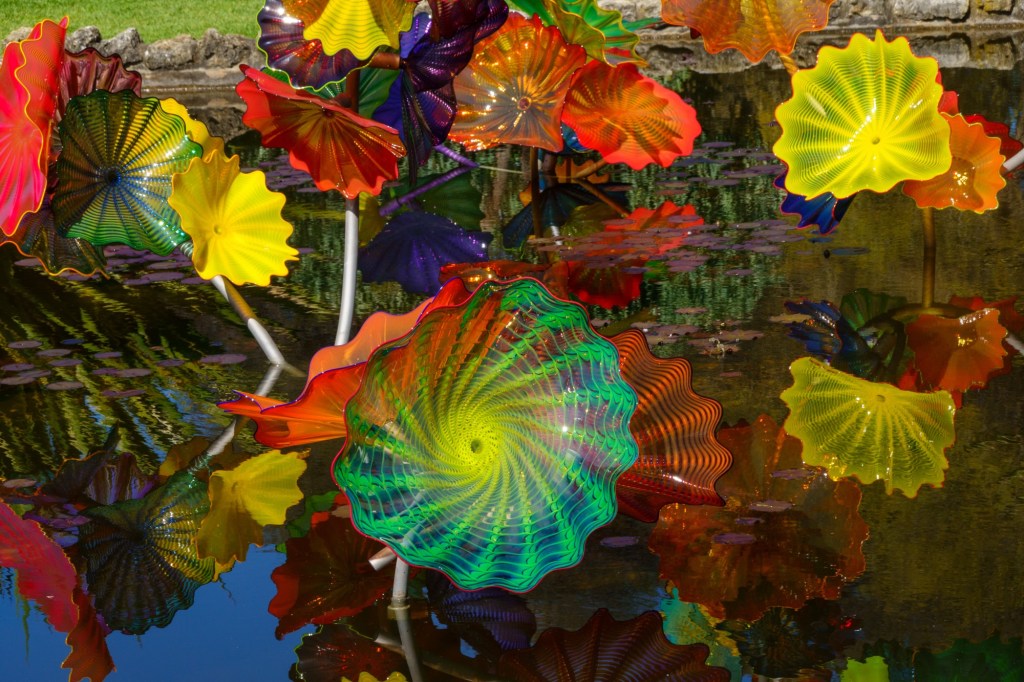
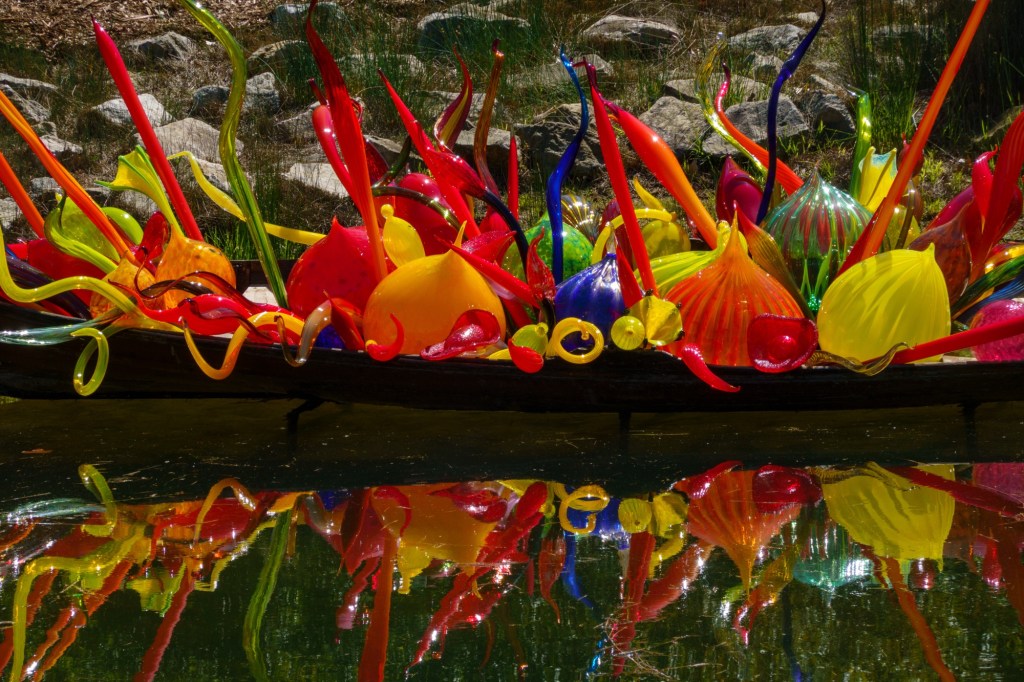
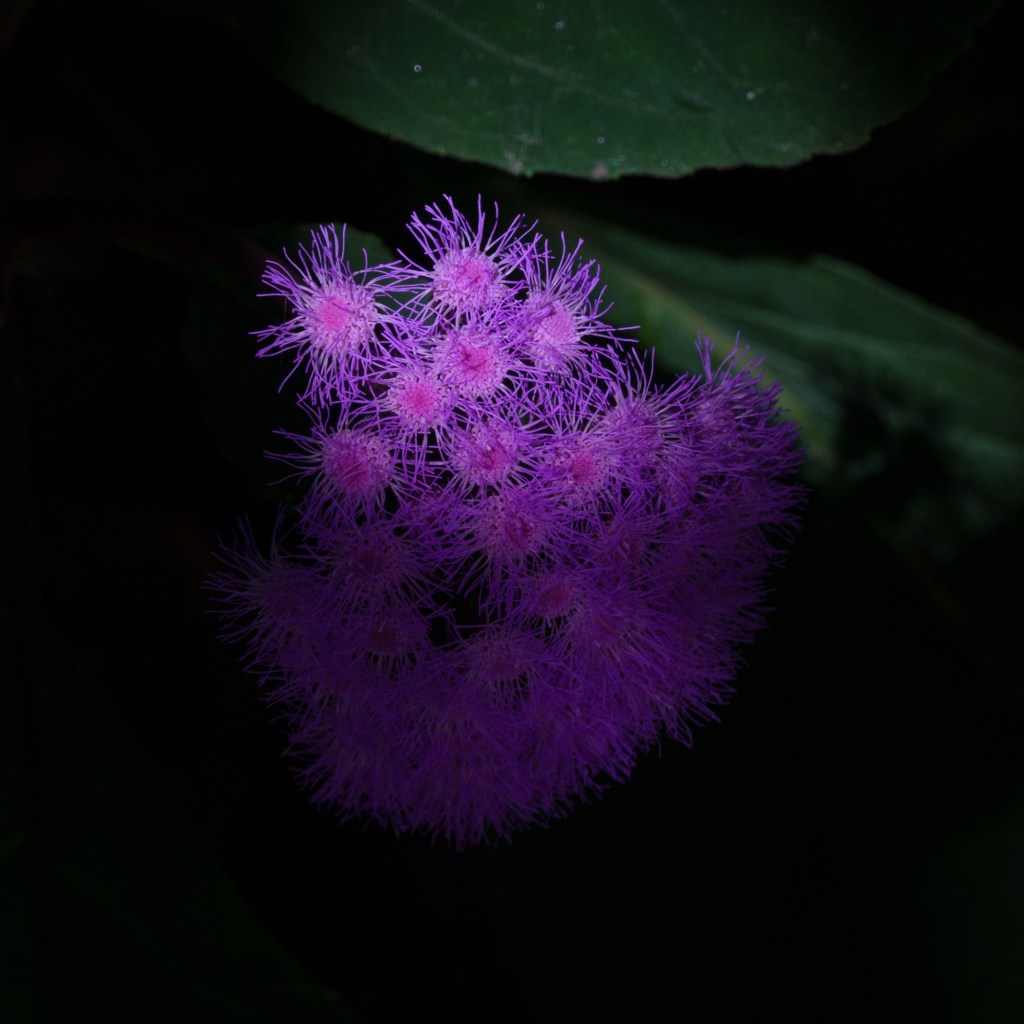
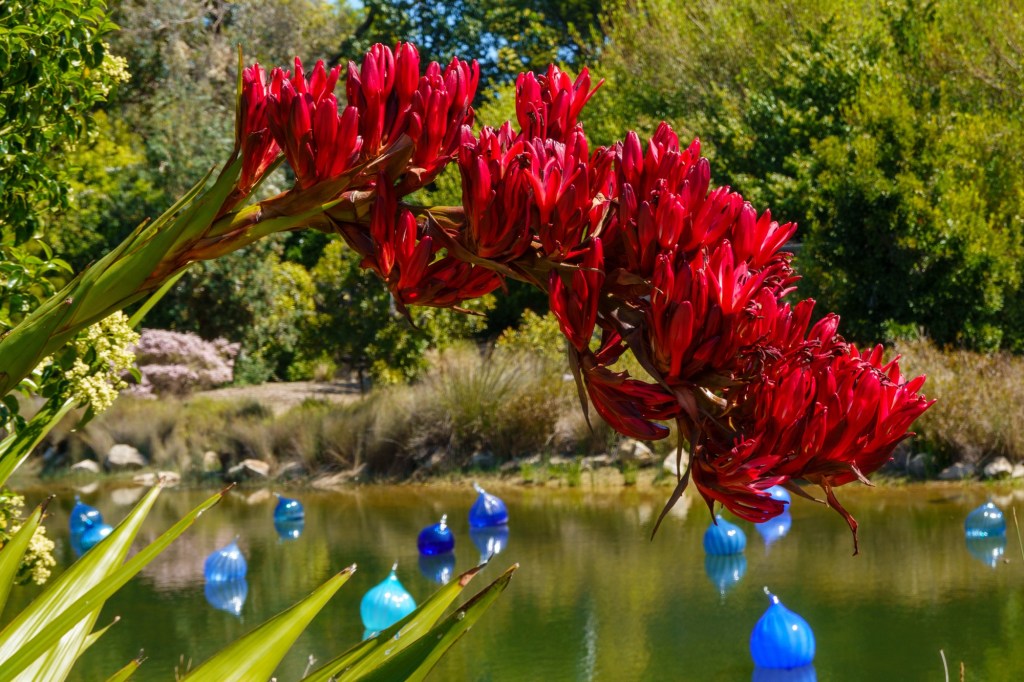
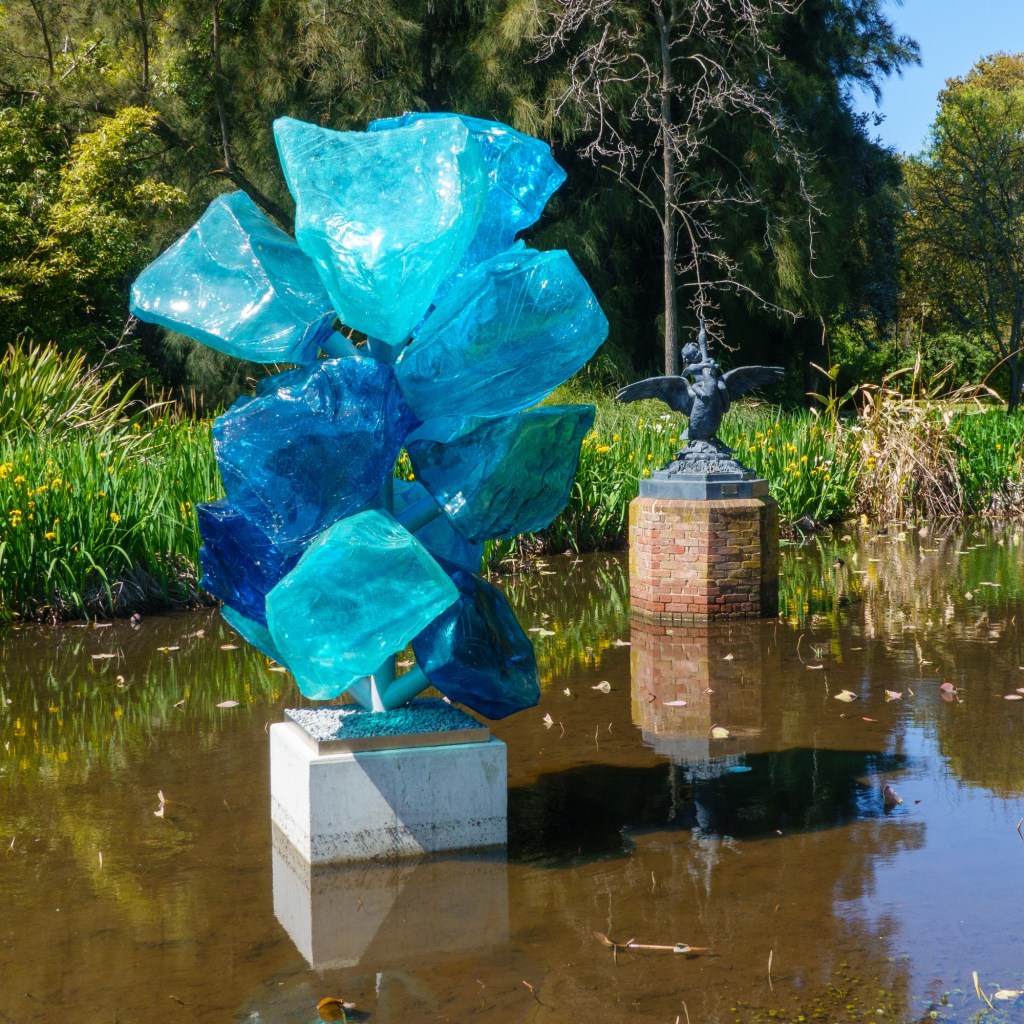
The main destination was the Botanic Gardens and its new exhibition of glasswork by Chihuly. Which opens tomorrow. Primarily a “lit” experience, we did see the bulk of the work throughout the park in the daytime. Colourful bobbles. Before I got my eye in, I thought I was looking at plastic bags covering something until I realised it was a genuine “hooly”. They were impressive, especially for blown glass – he must have long arms and large lungs.
Chihuly in the Botanic Garden – daylight
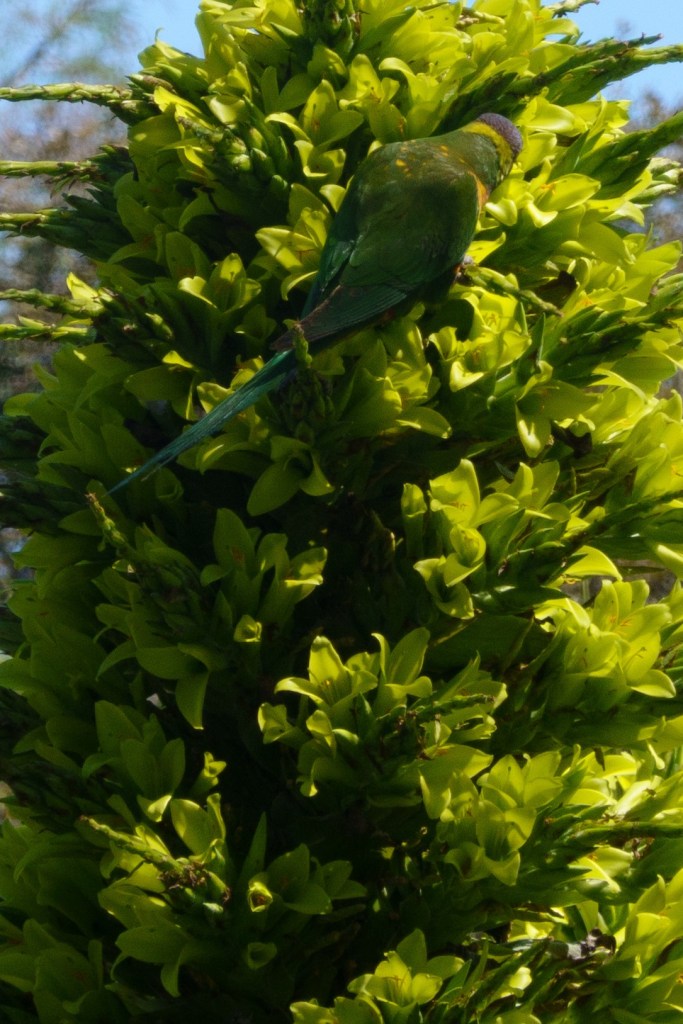
Getting to grips with the wildlife too. Ibis are akin to our seagulls. Magpies are magpies except white and black. Ducks are ducks and chicks are cute. Parakeets look more natural here than London and blend in better. Not too many dogs.
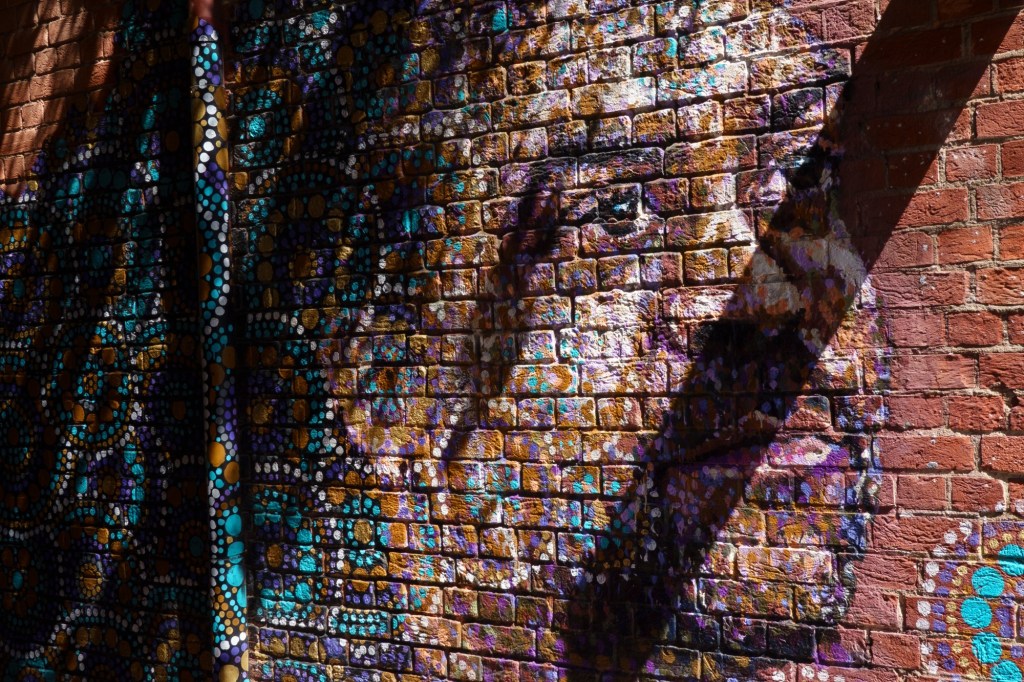
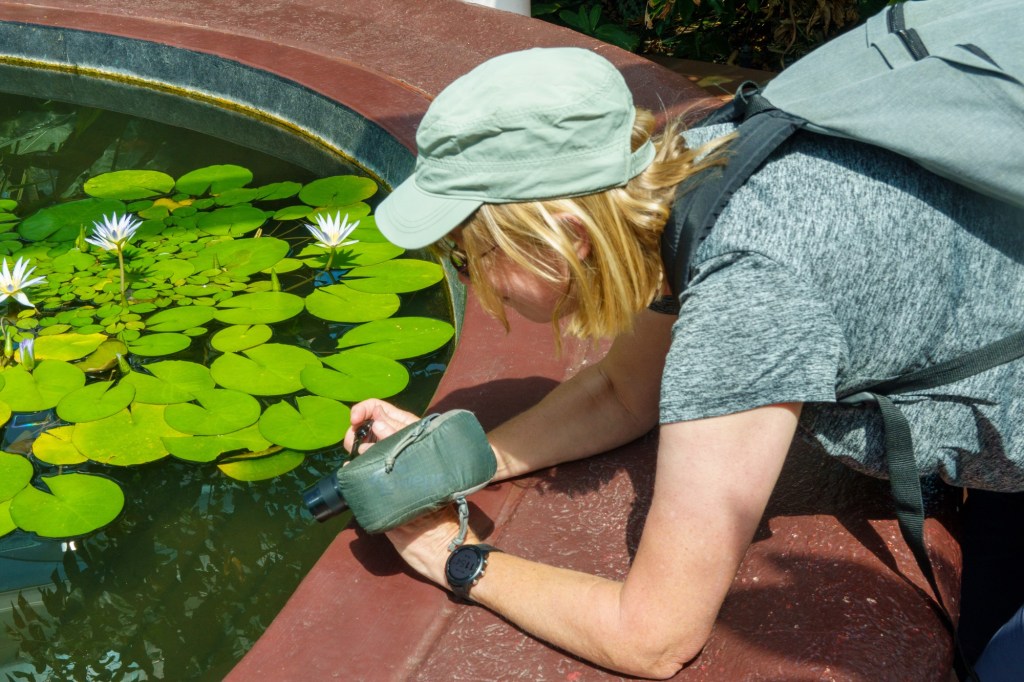
Great street artWater lilyScavenging Blends in well
Bike inspection prompted by Barbara’s badly damaged transport box has, thankfully, shown no visible damage. My inspection, prompted by the simple 10 minute it takes to add an eSim for data to Barbara’s phone turning into 100 with messages from BT saying your phone is about to self destruct, has shown no visible damage. Just internal bruising. Thanks for asking……
“Pedaling across southeastern Australia, Tasmania…..the multitude of experiences will be hard to fathom: pleasant wine regions, limestone coast of the Great Ocean Road, fascinating cities of Adelaide, Melbourne, Sydney.
From Adelaide the cyclists will cruise along the coast on the gorgeous Great Ocean Road, stopping in Melbourne and its arts and coffee scenes. A ferry will bring the riders to Tasmania, where they will experience white sand beaches, rocky headlands, alpine lakes, and misty mountains. Back on the mainland, they will now climb up into the ‘Australian Alps’ before swinging down through Canberra, the country’s capital, and on into cosmopolitain Sydney.”
TDA is the company we’ve used for other trips like this. There’s about 15 starting, so we should have remembered names before Sydney.
The Australian leg is 3500km. Which is of course correct, as Australia converted from miles to kilometres on 1 July 1974. Our conversion remains 5/8 so it’s about 2200 miles to the Imperialists. To keep things simple for visitors from the UK they remain on the left – we hope.
A smooth journey overall, once the wonderful BA assistant Cris (with no h), had wrangled the check-in system to the floor to allow us to book our bikes on at the airport. “You can’t add the extra bag on- line beforehand as the leg to Sydney is on a different airline”. But you sold us one ticket that covers both airlines. “Don’t be smart with us – and anyway it’s a cinch to add the extra bag at the airport check-in”. A sweaty 30+ minutes wait watching Cris’ eyebrows be his only expression of worry. A work around was found.
Having taken approaching 24 hours flying to Adelaide from Heathrow, you do have to wonder and admire the early Western explorers bobbing across the oceans to get here. “Take a note Walter (the Pigeon). Have reached a large expanse of land with an even bigger beach in the middle. Sent to UK with conviction”.
The impressively smooth transfer at Sydney was somewhat delayed in taking off whilst waiting for a no-show passenger’s bag to be found and removed from the plane’s hold. Dislocating the shoulder of the baggage handler in the process (witness the poor fella surrounded by 6 uniforms of which maybe 2 were medics. Still be grateful it wasn’t one of St John’s specialist forces).
Adelaide is a city of 1.4 million folks. (As the whole state is 1.8 million we can expect a few small towns in days to come:after Adelaide the next largest is 28000). The next few days we’ll be exploring on foot and bus. Foot might take a long time and hazardous. The pedestrian crossings take ages to allow you to cross then change almost with your first step. There’s probably a remote controller in stitches somewhere, watching the clock and reflecting on why this region has a time zone 30 minutes different from Sydney.
Here’s some reflections from my Chase the Sun North ride last week. Wrote them for personal memory and hope none of it comes across as “look at me”.
Here’s the route over 350 people starting in Whitley Bay from racing snakes to more sedate riders on a variety of bikes and gear. (Over 800 on the CTS south ride). 317 finished in Ayr 200 miles away to the west, even if after sunset.
North is fantastic route, my favourite landscapes: quiet lanes, open vistas of rolling hills, sweeping descents after shorter ascents. Privelege to be able to do this.
200 miles in a time limit is a long way: mentally as much as (more than?) physical. Training for both needed. I’m not used to starting cycling at 4:30 am with a sunset ride arrival limit of 17.5 hours later.
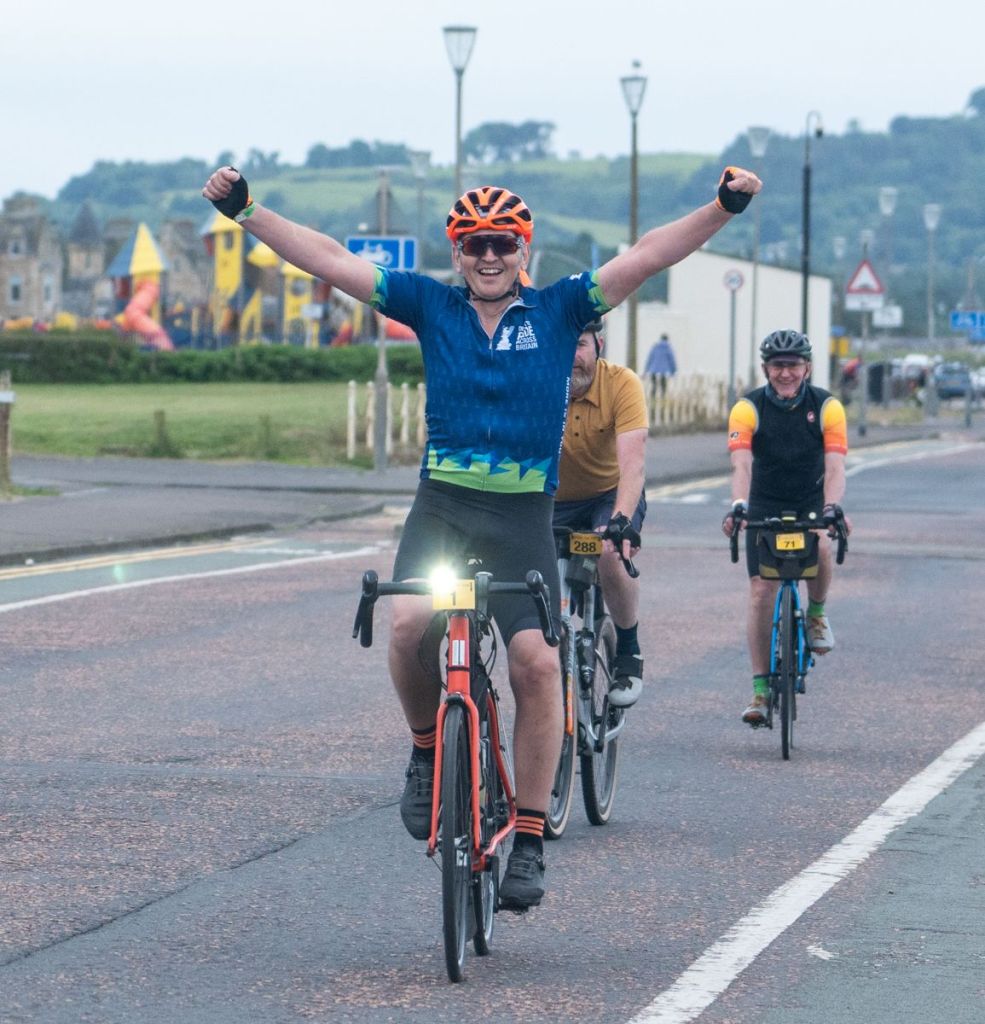
Rob, Mark and me, 200mile smile
What’s your motivation? First time I did this, 2022, it was because it was there: a challenge. This time was more complicated. 3 months after the first ride I discovered I’m not immortal: Polymyalgia Rheumatica, an autoimmune disease, stopped me in my tracks, literally. Stairs a challenge, walking painfully slow: a real humbling experience. Never before had I stopped to think I can’t cross the road in time nor have to use my hand to lift my leg up onto the kerb. So take nothing for granted, look out for others and appreciate what you’ve got is my lesson. Ongoing treatment with steroids controls inflammation whilst the body sorts itself out. Prior to diagnosis and treatment I was languishing in bed not able to move without pain nor sleep, contemplating selling my cycling gear. So when I got mobility back (not strength) I set a goal to it again. 2 months ago, during an inflammation flare, I doubted my sanity. Then seeing Barbara focus on completing a more difficult challenge of the recent Swansea 3k open water swim (her first) gave me the kick I needed. Just get on with it…..(and you’re bored now).
Graze and drink regularly: eat and drink for what’s to come, not for what you’ve done. Power of imaging. This British Cycling article on preparation is spot on.
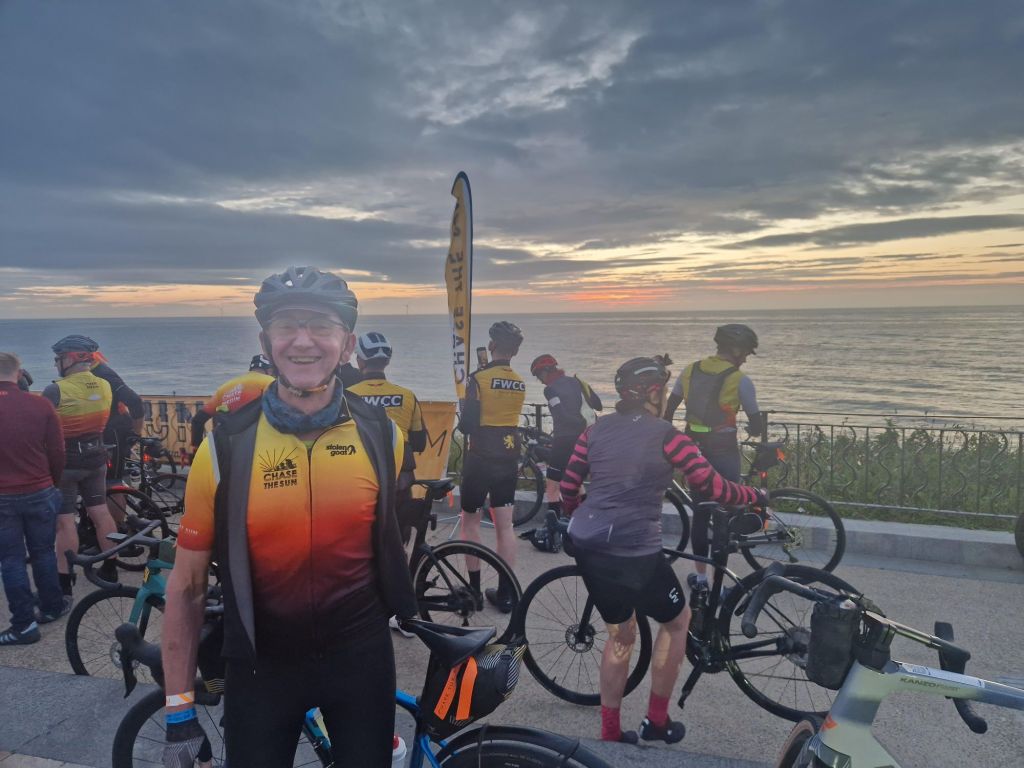
Don’t faff, focus. Keep stop time to a minimum: regular stops every 35 miles or so for 10 mins. That makes it 6x 35 miles rides which seems more manageable than 200. Ride, reset, ride, repeat. The tough zone is 100-150 miles, 100 in and 100 to go: the mind says “what are you doing”! Keep going…
That was just my strategy, including not to rely on what I knew were busy pinchpoints. e.g. the lunch stop in Langholm. Others will have different strategies; stopping longer and cycling faster. The main thing is to have thought about it and practiced key elements.
Bike prep critical, mine was serviced to within an inch of it’s life, for my piece of mind. Didn’t stop the “what if I get a puncture now” fear over the last 30 miles. Did I sort the leaky valve (of course I had, but didn’t stop the chimps in the brain niggling). Talking of chimps, the body says “you’re hurting, stop. That’s a pain in your knee, time to stop”. Ignore, ignore and amazingly it goes away. Except the pain in your arse: that’s for real.
Riding in a group, with a support van, was better and faster than when I did it purely solo 2 years ago. Only 3 of us, arranged via Facebook, so not a peleton. More social, supportive and dragged each other along at times. Know your Garmin or other device. I saved us a couple of times, from the back, going confidently straight on when we had to turn. The others supported me by time keeping (2minute warning on a 10 minute stop) and chatting, as well as giving me a wheel to focus on, with Rob setting the pace. Indulged my panic when I shouted “stop!” in middle of nowhere after 3 hours. What’s up? I’d forgotten to take my daily steroid dose for PMR. Chimp back into cage…. Supported better than solo (thanks to Rob’s friend Steve support driver who allowed me to put stuff in his van and fed coffee every 35miles) and as part of a small group.
Ignore any devices: I woke up at 3:15am to get ready for 4am meet and 4:30!depart, having not slept well due to nerves: Garmin watch said body battery of 22%. Ignore. As you need to any boasting posts before hand (smashed this training ride in a stupid time): not a race, your ride. Do know the pace you can sustain and plan the stop times accordingly, with a safety factor.
4:15 am
Smile, sing, joke: positive vibes quieten anxiety and distract. Say hello to people you pass or who pass you – especially if they don’t say hi to you! Face piles of trials with smiles. It helps others too.
Study the route and plan: I knew not to stop at the main lunch spot – a bottle neck for someone of my speed.
Can you do it: yes you can. I’ve developed a wee mantra I say over and over when going gets tough, even out loud : “I can, I will, I am, I have” . Silly I know but it helps me.
Would I do it again: 3rd time. North, maybe; South not (don’t fancy stop starts at lights in a more urban route); Italy, hmmm; Ireland, probably too tough with challenging logistics of getting home. There are other options, such as the 300k Audax C2C2C each July. Choices choices choices
Time out to train (for me) is a commitment which needs to be planned in with space for other things. Barbara was very supportive in my indulgences. Riding with groups such as Velotawe helped rebuild my confidence in both groups and being able to sustain a medium pace. Leading up to this I’ve done 5 200k Audaxes this year, which I’ve enjoyed. Helps prepare for weather. CTS is East West: prevailing wind is from the west. Both times headwinds have been a challenge with often not much shelter. Very little rain though: if that had been added in for a sustained period I’d have worried. Ditto strong sun. Be prepared for all eventualities, take a good raincoat. Everyone trains differently and you don’t have to do many long rides – just enough so your body gets to know what to expect and you get to know what works for you (food, water etc) and how to eat on the bike. Nothing, nothing, nothing new or unknown on the day.
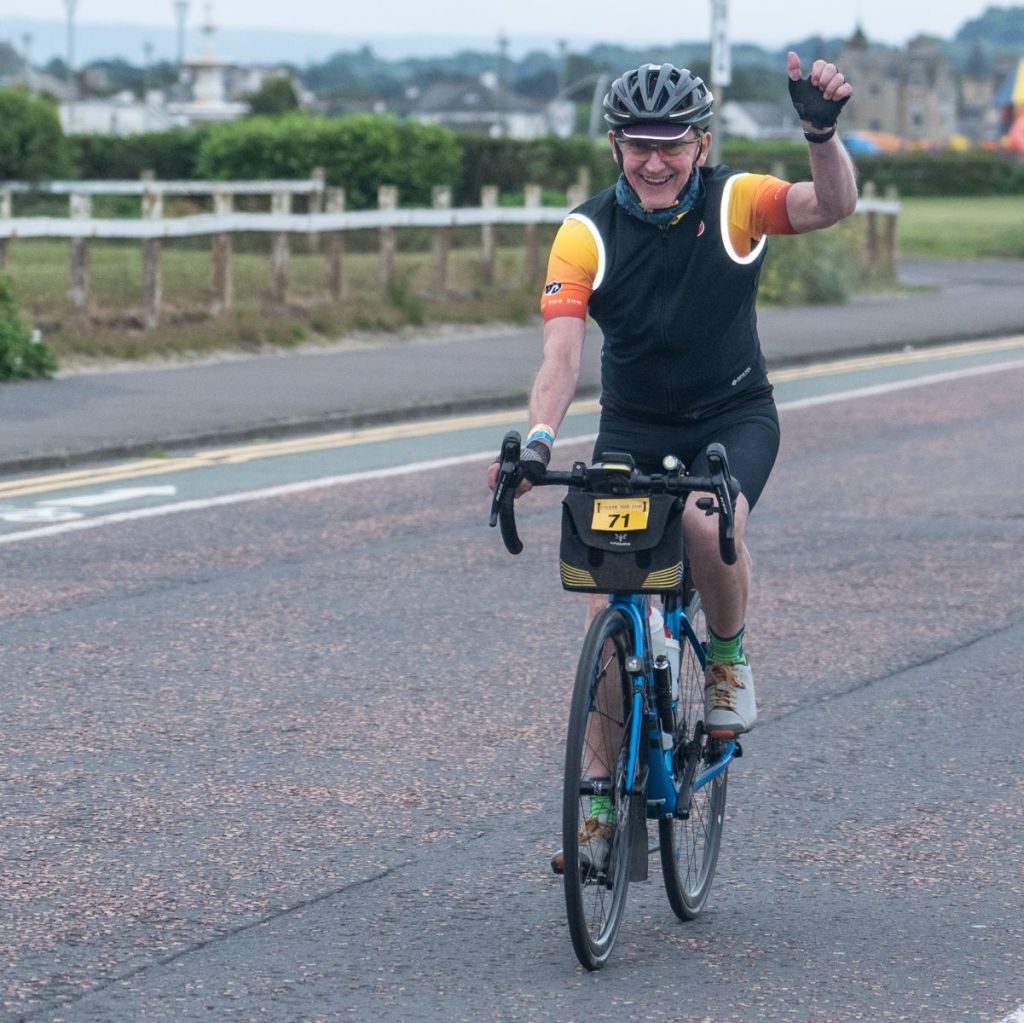
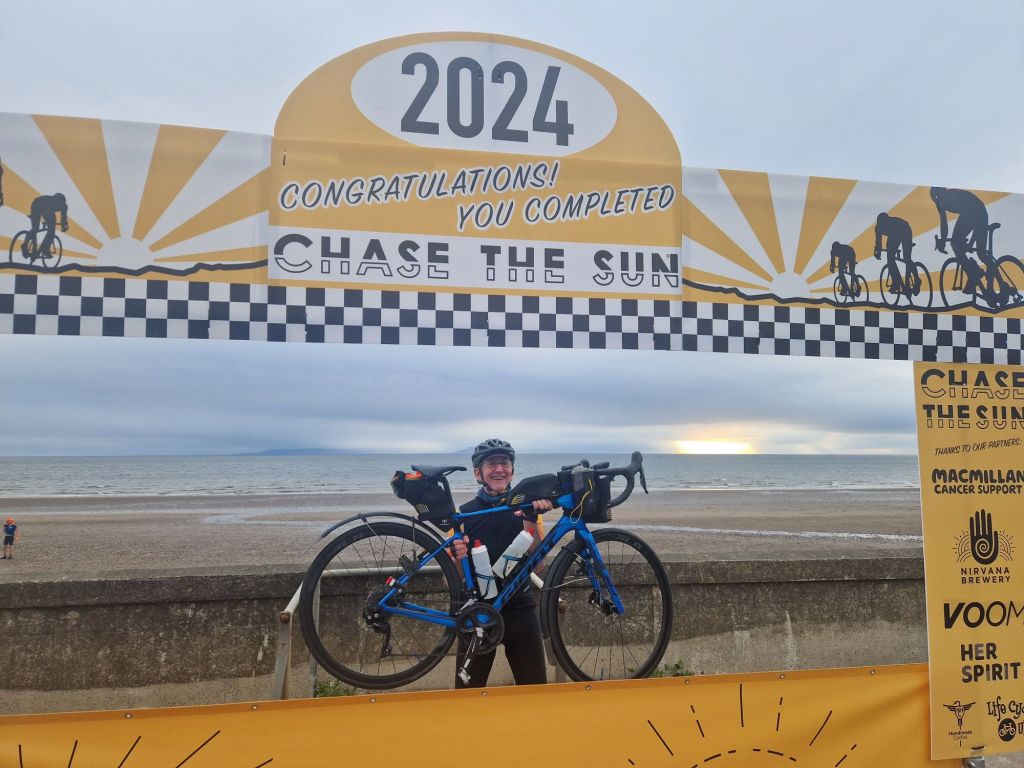
Finish(ed)
Emotional at end, those bagpipes do it every time. Also realised I was shutting down as started to shiver. Goretex Shakedry on. The photographer started to talk to me, admiring the Shakedry: “I used to work for Gore, I invented that fabric….” I shook his hand and smiled broadly.
Met a small family in hotel lobby in morning. At 17 the lad was the youngest to it and he was pleased to arrive at 11:30pm. His father arrived at 11:55, having had a gear shifter fail and he had stopped to make a work around: great presence of mind. His reflection: he Mountain bikes and needed to train more for this road event, and to have his bike serviced beforehand. Amen to that!
Met a young person, recently graduated, on train to Glasgow. He’d cycled the whole 200 miles with his overnight stuff in a rucsak. I admired him for that. His reply : “I hope to still be cycling when I get to your age, never mind doing this”. I think that was meant as a compliment, but I’m only 66 years young….
Final notes: allow a day for adrenaline to come down. Enjoy, especially admiring those who didn’t “smash it” or who didn’t complete – but were still happy to have tried. I was really chuffed to arrive at 8:45pm with sunset at 10:05pm. 2 years earlier I was pleased and relieved to arrive at 9:55 for a 10:00pm sunset. Enjoyed this year more, probably because I knew what to expect and the small group saved me from my own company.
If you’re tempted, jfdi…..entries open Nov. You will enjoy, endure and remember (for this type of thing) pain is short term, memories are long term…..
















 Travelling reflections